Regional Business Travel
Efficient travel for 4–8 passengers with minimal baggage.
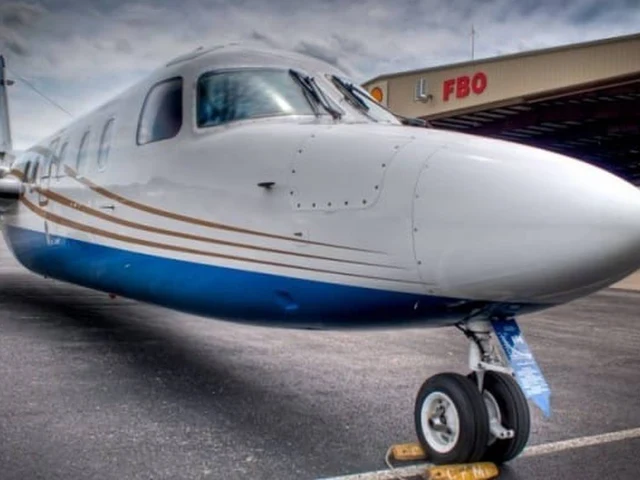
Capacity
up to 8 pax
Speed
741 km/h
Range
2,555 km
Cabin height
1 m
Cabin length
4 m
Cabin width
1 m
Luggage
Baggage
Estimated rental price
5,200 € / hour
6,162 $ / hour
Find your scenario
Efficient travel for 4–8 passengers with minimal baggage.
Ideal for remote area flights with proper equipment.
Focus on speed and runway flexibility over amenities.
Measurement system:
Range
2,555 km
Cruise Speed
741 km/h
Service Ceiling
6,100 m
Takeoff weight
10,660 kg
Landing Distance
655 m
Takeoff Distance
1561 m

Rent price
All prices are estimates. Final costs are subject to real-time aircraft availability and individual mission details. Contact your JETVIP expert for a firm quote and the most competitive market rate for your trip.
This development turned out to be universal and was used both for administrative purposes and in the military, so the Westwind I order became very popular.
Model Westwind I (full name Model 1124 Westwind I) was a modification of Model 11 24 Westwind. This aircraft differs from its predecessor by improvements in technical equipment. First of all, it was a removable 382-liter tank in the front luggage compartment. The developers increased the aircraft cockpit by 5%, using the RCA Primus 400 color radar as standard equipment.
Since 1978, 116 models have been produced, most of which have been sold to the United States. Four planes were bought by Germany for its Air Force. This development turned out to be universal and was used both for administrative purposes and in the military, so the Westwind I order became very popular.
When refining this configuration, special attention was paid to the interior. It became more comfortable, there was a kitchen area, as well as a toilet, which made renting Westwind I much more convenient.
Regional business travel with 4–8 passengers and limited baggage complexity
Long overwater/remote-area legs when equipped and operated with appropriate approvals and equipment
Operators prioritizing cruise speed and runway flexibility over newest-cabin amenities
The IAI Westwind 2 is a legacy midsize business jet derived from the Westwind airframe family, known for higher-speed cruise compared with many contemporaries of its era and for operating from a wide range of paved airports. It typically appeals to buyers who want a capable point-to-point aircraft for regional-to-long regional missions and who are comfortable with older-generation avionics and cabin systems, or who plan targeted modernization.
In typical operations, the Westwind 2 is used for owner and corporate travel where time en route matters and cabin expectations are ‘traditional business jet’ rather than large-cabin. It can cover many domestic and near-international city pairs efficiently, but mission planning should account for payload/range tradeoffs, alternate and reserve requirements, and the specific aircraft’s avionics and equipment list.
Cabin experience is defined by a classic midsize-jet cross-section with club-style seating common, practical aisle access, and a layout optimized for business travel rather than open, lounge-like space. Noise levels, pressurization feel, and environmental controls depend heavily on aircraft condition and interior refurbishment history; many examples have been updated with modern materials and selective comfort upgrades.
The Westwind 2 reflects an earlier avionics philosophy: reliable core systems with fewer integrated automation features than modern glass-cockpit jets. Many aircraft have received avionics retrofits (e.g., GPS/FMS, digital autopilot upgrades, ADS-B solutions), and the buyer experience is shaped more by the specific upgrade pathway than by the baseline type design.
Operationally, the Westwind 2 tends to reward buyers who fly predictable trip lengths and can plan around legacy-platform realities: higher crew workload than newer designs, more variability between individual aircraft, and performance that is sensitive to weight, temperature, and runway length. Budgeting and scheduling should assume that aircraft condition and maintenance program choices drive real-world availability as much as the published performance envelope.
Number of aircraft of this model at each base.
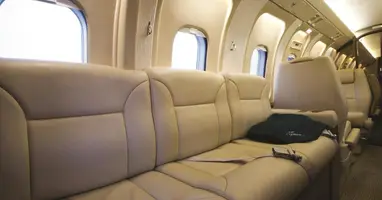
Built / int. refit
1980
Capacity
up to 9 pax
Baggage
Cabin height
1 m
Rental price
1,500 € / hour1,770 $ / hour
Estimated cost
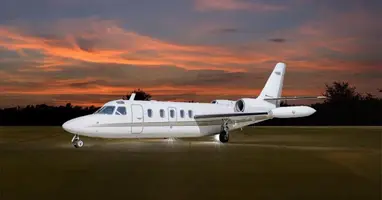
Built / int. refit
1979
Capacity
up to 9 pax
Baggage
Cabin height
1 m
Rental price
1,500 € / hour1,770 $ / hour
Estimated cost

Built / int. refit
1983
Capacity
up to 8 pax
Baggage
Cabin height
1 m
Rental price
1,500 € / hour1,770 $ / hour
Estimated cost
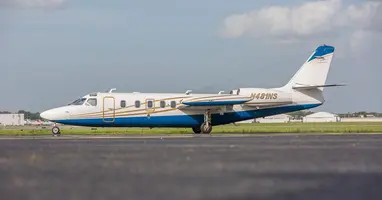
Built / int. refit
1982
Capacity
up to 9 pax
Baggage
Cabin height
1 m
Rental price
1,500 € / hour1,770 $ / hour
Estimated cost
Built / int. refit
1978
Capacity
up to 8 pax
Baggage
Cabin height
1 m
Rental price
5,200 € / hour6,162 $ / hour
Estimated cost
Built / int. refit
1978
Capacity
up to 8 pax
Baggage
Cabin height
1 m
Rental price
1,500 € / hour1,770 $ / hour
Estimated cost
Built / int. refit
2008
Capacity
up to 8 pax
Baggage
Cabin height
1 m
Rental price
1,500 € / hour1,770 $ / hour
Estimated cost
Built / int. refit
1980
Capacity
up to 9 pax
Baggage
Cabin height
1 m
Rental price
5,200 € / hour6,162 $ / hour
Estimated cost