STOL Operations
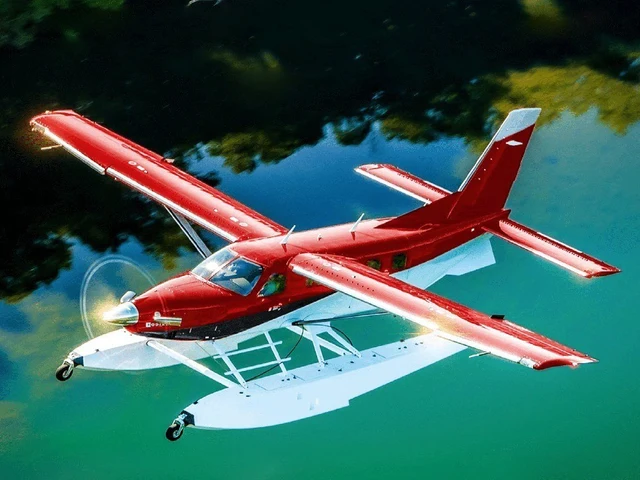
Access remote strips with short and unimproved runways.
Capacity
up to 9 pax
Speed
183 km/h
Range
2,096 km
Cabin height
1.49 m
Cabin length
4.6 m
Cabin width
1.4 m
Luggage
Baggage
Estimated rental price
5,200 € / hour
6,162 $ / hour
Find your scenario
Access remote strips with short and unimproved runways.
Easily switch between passenger and cargo configurations.
Ideal for utility support and medevac roles.
Efficiently serve regional routes with quick turnarounds.
Measurement system:
Range
2,096 km
Cruise Speed
183 km/h
Service Ceiling
7,600 m
Takeoff weight
3,291 kg
Number of Engines
1
Engine Model
Pratt & Whitney Canada PT6A-34
Landing Distance
215 m
Takeoff Distance
285 m

Rent price
All prices are estimates. Final costs are subject to real-time aircraft availability and individual mission details. Contact your JETVIP expert for a firm quote and the most competitive market rate for your trip.
Short and unimproved runway operations (STOL) into remote strips
Mixed passenger/cargo missions with frequent reconfiguration
Special-mission roles (survey, utility support, medevac-style interiors, parachute operations depending on configuration)
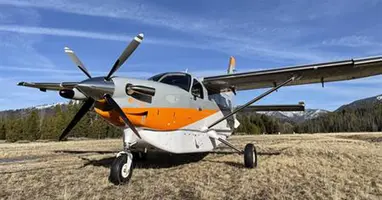
The Kodiak 100 Series I is a fixed-gear, single-engine turboprop designed around practical utility: short and unimproved runway capability, straightforward loading, and predictable handling at low speeds. It is commonly configured for commuter-style seating, mixed passenger/cargo layouts, or high-cycle special-mission work where dispatch reliability and field performance matter more than cruise speed or a pressurized cabin.
This model fits operators who need consistent access to constrained airports and backcountry strips while carrying meaningful payload. It is most effective on regional stage lengths where takeoff/landing performance and turn-time drive schedule. If typical routes routinely demand higher cruise speeds, higher-altitude comfort, or long legs with larger reserves, a faster pressurized turboprop or light jet may align better.
Cabin experience is utilitarian and mission-driven. Interiors vary widely, from higher-density seating to executive-style layouts, and many aircraft are equipped with durable materials to tolerate frequent loading and field conditions. Large doors and a practical cabin volume support quick passenger flow and cargo handling, but noise levels and ride comfort are closer to working turboprop norms than to pressurized business aircraft.
Series I aircraft typically emphasize proven, field-oriented systems over maximum automation. Most are equipped with integrated glass avionics appropriate for IFR operations, but the broader design prioritizes robustness, maintainability, and predictable performance in and out of short fields. Equipment levels vary by serial number and operator mission, so the avionics, surveillance, and mission equipment should be validated aircraft-by-aircraft.
Typical operations center on regional missions with frequent cycles: short legs, quick turns, and operation from shorter or less-improved runways. The fixed landing gear and turbine powerplant support predictable day-to-day dispatch, while the airframe is generally tolerant of utility use when maintained to the correct standard. Real-world performance is highly dependent on density altitude, runway surface condition, and loading discipline.
Number of aircraft of this model at each base.

Built / int. refit
2013 / 2013
Capacity
up to 9 pax
Baggage
Cabin height
1.49 m
Rental price
5,200 € / hour6,162 $ / hour
Estimated cost
Built / int. refit
2021
Capacity
up to 7 pax
Baggage
Cabin height
1.49 m
Rental price
5,200 € / hour6,162 $ / hour
Estimated cost