From $3,000 to $25,000 per hour: How much does a private jet flight cost
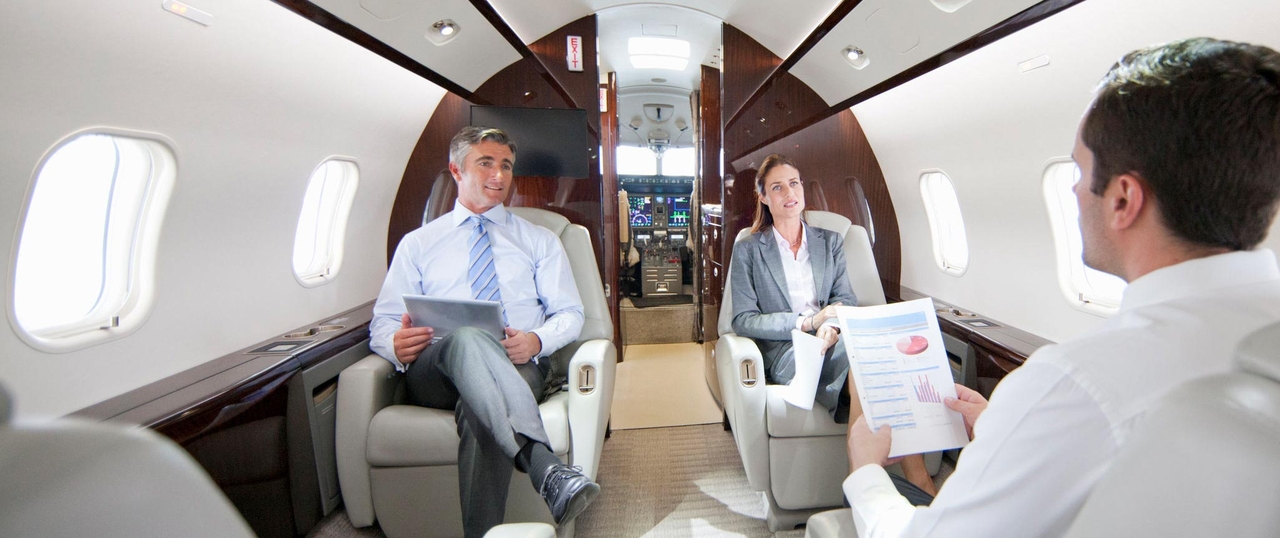
The cost of flying on a light jet starts at $3,000 per hour, on a heavy jet it goes up to $13,000, and on a VIP airliner, it reaches $25,000. Let's break down the prices, hidden costs, and when chartering is more economical than flying business class.
Private jets have long ceased to be the exclusive privilege of billionaires. The business aviation market offers a wide range of options—from compact light jets at $3,000 per hour to VIP airliners costing $25,000 per hour. We will explore the pricing structure and determine when private flights become economically justifiable.
Classification of Business Jets: From Affordable to Exclusive
Very Light Jets — Light Jets for Short Flights
Specifications:
- Capacity: 4-6 passengers
- Range: up to 2,000 km
- Cruising speed: 650-750 km/h
- Typical models: Cessna Citation Mustang, Embraer Phenom 100, HondaJet
Rental cost: $3,000-4,500 per hour
Light jets are suitable for short regional flights—such as Moscow-Sochi or Moscow-St. Petersburg. This is the most accessible segment of business aviation, where time savings compared to commercial flights become the main advantage.
Midsize Jets — Medium Jets for Regional Routes
Specifications:
- Capacity: 6-9 passengers
- Range: 3,000-4,500 km
- Cruising speed: 750-850 km/h
- Typical models: Hawker 800XP, Cessna Citation XLS+, Learjet 60
Rental cost: $5,000-7,000 per hour
Midsize jets are the optimal choice for most corporate tasks. They can take you from Moscow to most European capitals or Middle Eastern destinations. The cabin is more spacious than that of light jets, with a complete area for work and relaxation.
Heavy Jets — Heavy Jets for Long-Distance Flights
Specifications:
- Capacity: 10-16 passengers
- Range: 6,000-8,000 km
- Cruising speed: 850-950 km/h
- Typical models: Gulfstream G550, Bombardier Global 6000, Dassault Falcon 7X
Rental cost: $9,000-13,000 per hour
Heavy jets are the standard for long-haul flights. They fly from Russia to Dubai, Bangkok, and the Maldives without refueling. The cabins are equipped with sleeping areas, showers, full kitchens, and conference rooms.
VIP Airliners — Exclusive Airliners
Specifications:
- Capacity: 20-50+ passengers
- Range: 10,000+ km
- Typical models: Boeing Business Jet (BBJ), Airbus ACJ
Rental cost: $15,000-25,000 per hour
VIP airliners are fully equipped commercial aircraft converted for private flights. They are rented for large corporate delegations, sports teams, or government missions. The interior may include several bedrooms, conference rooms, and medical offices.
Tip: Use the flight cost calculator for private jets
What’s Included in the Cost and What Hidden Expenses Exist
The price quoted by operators is not always final. The rental cost usually includes:
Basic Inclusions:
- Crew work (pilots, flight attendants)
- Navigation services
- Basic catering (water, snacks)
- Passenger insurance
Additional Expenses:
- Airport fees ($500-3,000 depending on the airport)
- Aircraft parking ($200-1,000 per day)
- Premium catering ($500-3,000 per flight)
- VIP ground transport
- Aircraft positioning (if the jet is not at the departure point)
Positioning is often an unnoticed expense. If you order a plane from Moscow to Sochi, but the nearest available aircraft is in Yekaterinburg, you'll have to cover its repositioning. This can add 30-50% to the base cost.
To accurately calculate the cost of a specific route considering all variables, specialized calculators are used that analyze aircraft availability and current operator rates.
Comparison: When Chartering is Economically Justifiable
Example Calculation: Moscow — Dubai
Option 1: First Class on a Regular Flight
- Ticket price: $4,000-5,000 per person
- For a group of 4 people: $16,000-20,000
- Travel time (including transfers to the airport): 7-8 hours
- Check-in, waiting, customs: 2-3 hours
Option 2: Midsize Business Jet
- Charter cost: ~$35,000-40,000
- Travel time: 4.5-5 hours
- Arrive 15 minutes before departure
- Depart from a convenient airport (Vnukovo-3, VIP terminals)
Financial Logic: For a group of 4 people, chartering will be twice as expensive. However, if you consider:
- Saving 3-4 hours of work time
- The ability to hold confidential negotiations
- Schedule flexibility (depart when convenient)
- Stress-free experience
For top management with a rate of $500-1,000 per hour, the price difference pays off with time savings.
When First Class is More Advantageous
- One passenger on a long route
- Regular flights with convenient schedules
- No urgency or critical confidentiality
- Budget is limited
When Chartering is Justified
- A group of 4-5 people
- Non-standard route or schedule
- Critical time savings
- High level of confidentiality
- Need to work during the flight
How Prices Have Changed in 2024-2025
The Russian business aviation market has undergone significant transformation. Sanctions and the closure of European airspace have led to an increase in operational costs.
Main Factors for Price Increase:
- Extended Routes — circumventing closed territories adds 1-2 hours of flight time
- Rising Fuel Costs — prices have increased by 25-30%
- Aircraft Shortage — part of the fleet has been taken out of service
- Maintenance Services — spare parts are delivered slower and at a higher cost
Total Increase: Charter flight prices have risen by 30-40% compared to 2021.
Despite this, demand remains stable. Wealthy clients are willing to pay a premium for maintaining mobility and access to international destinations via Turkey, the UAE, and CIS countries.
New Aircraft in the Fleet: How the Market Compensates for Shortages
Despite the challenging situation, the Russian market showed unexpected dynamics in 2024-2025. Several midsize and long-range business jets were imported into Moscow, partially compensating for the reduction in available aircraft.
Models that have joined the Moscow fleet:
- Embraer Legacy 600 and Legacy 650 — midsize jets accommodating 13-14 passengers with a range of up to 6,000 km
- Bombardier Challenger 850 — heavy jet for 15 passengers with a range of up to 5,200 km
- Bombardier Global 5000 and Global XRS — long-range jets with a range of up to 9,600 km
The import of these aircraft has allowed operators to expand their market offerings, especially in the sought-after segment of long-haul flights to Dubai, Turkey, and Asian countries. The increase in the fleet has helped somewhat contain price hikes—without these new aircraft, the rise could have been 30-40% instead of the actual 50-60%.
Alternatives to Full Charter: How to Reduce Costs
Empty Legs — Discounted Empty Flights up to 75%
An empty leg refers to the positioning of an aircraft without passengers. For example, if someone has chartered a jet for a Moscow-Dubai flight, the return flight may fly empty. Operators sell these flights at a discount of 50-75% off the regular price.
Advantages:
- The price of a light jet can drop to $1,500-2,000 per hour
- Heavy jets — from $4,000-6,000 per hour
- All other conditions are identical to a regular charter
Disadvantages:
- Route and time are fixed
- Offers appear spontaneously (1-3 days in advance)
- No guarantee of alignment with your schedule
Fractional Ownership
Purchasing a share in an aircraft—from 1/16 to 1/2. You become a co-owner of the aircraft and receive a guaranteed number of flight hours per year.
Financial Model:
- 1/16 share in a Gulfstream G550: $2-3 million
- Annual maintenance: $150-200 thousand
- Guaranteed: 50 flight hours per year
- Effective cost per hour: ~$40,000 (first year), then ~$4,000-5,000
Fractional ownership is justified for regular flights—starting from 50 hours per year. Below this threshold, it is more economical to rent as needed.
Who Can Afford Private Aviation
Annual Income of $3-5 Million
- Format: Occasional charters of light and midsize jets
- Frequency: 3-5 flights per year
- Annual Expenses: $50,000-100,000
- Share of Income: 2-3%
At this level, private flights are used for critical business trips or family vacations on special occasions.
Annual Income of $10-20 Million
- Format: Regular charters of midsize and heavy jets
- Frequency: 10-15 flights per year
- Annual Expenses: $200,000-400,000
- Share of Income: 2-4%
Business aviation becomes a working tool for managing business and international activities.
Annual Income of $50+ Million
- Format: Fractional ownership or own aircraft
- Frequency: 50-100+ flight hours per year
- Annual Expenses: $1-3 million (with an owned aircraft, this can reach $5-7 million)
- Share of Income: 2-6%
At this level, purchasing a private aircraft or participating in a fractional ownership program becomes economically justified.
How to Choose the Right Option
Step 1: Assess Flight Frequency
- Less than 10 hours a year — one-time charters or empty legs
- 10-50 hours a year — regular rentals with a search for favorable offers
- 50-100 hours a year — fractional ownership
- More than 100 hours a year — own aircraft
Step 2: Determine Typical Routes
For short regional flights (up to 2,000 km), light jets are sufficient. For international flights, midsize and heavy models are necessary.
Analyzing the most popular destinations and aircraft types for each route helps select the optimal category of aircraft. Modern business jet catalogs allow for comparisons of models based on range, capacity, and comfort level.
Step 3: Calculate Budget with a Margin
Add 20-30% to the base hourly cost for unexpected expenses: positioning, additional fees, premium services. This will provide a realistic picture of costs.
Conclusions: Business Aviation as a Tool for Efficiency
Private flights have ceased to be merely a status symbol and have become a working tool for entrepreneurs and top management. With proper planning and selection of format, costs for business aviation account for 2-4% of annual income, comparable to other categories of premium services.
Key Takeaways:
- Cost per flight hour: from $3,000 (light jets) to $25,000 (VIP airliners)
- Prices in Russia have risen by 30-40% due to sanctions, but demand remains high
- In 2024-2025, new Legacy 600/650, Challenger 850, and Global 5000/XRS jets were imported into Moscow, increasing supply
- Empty legs and fractional ownership allow for a 50-75% cost reduction
- Fractional ownership is justified for flight hours starting from 50 per year
- For incomes over $5 million per year, business aviation becomes accessible
The market continues to evolve, offering new formats and more flexible conditions. The digitization of the industry simplifies the booking process and makes pricing more transparent. For businesses where time is a critical resource, private aviation remains one of the most effective optimization tools.
Author: Alexander Osit, expert in business aviation
Company: JETVIP — charter operator and platform for private jet rentals
JETVIP: Beyond the Flight
Join 12,500+ subscribers and stay ahead of the curve.
Scan toopen Telegram