Fuel Stops for Private Jets
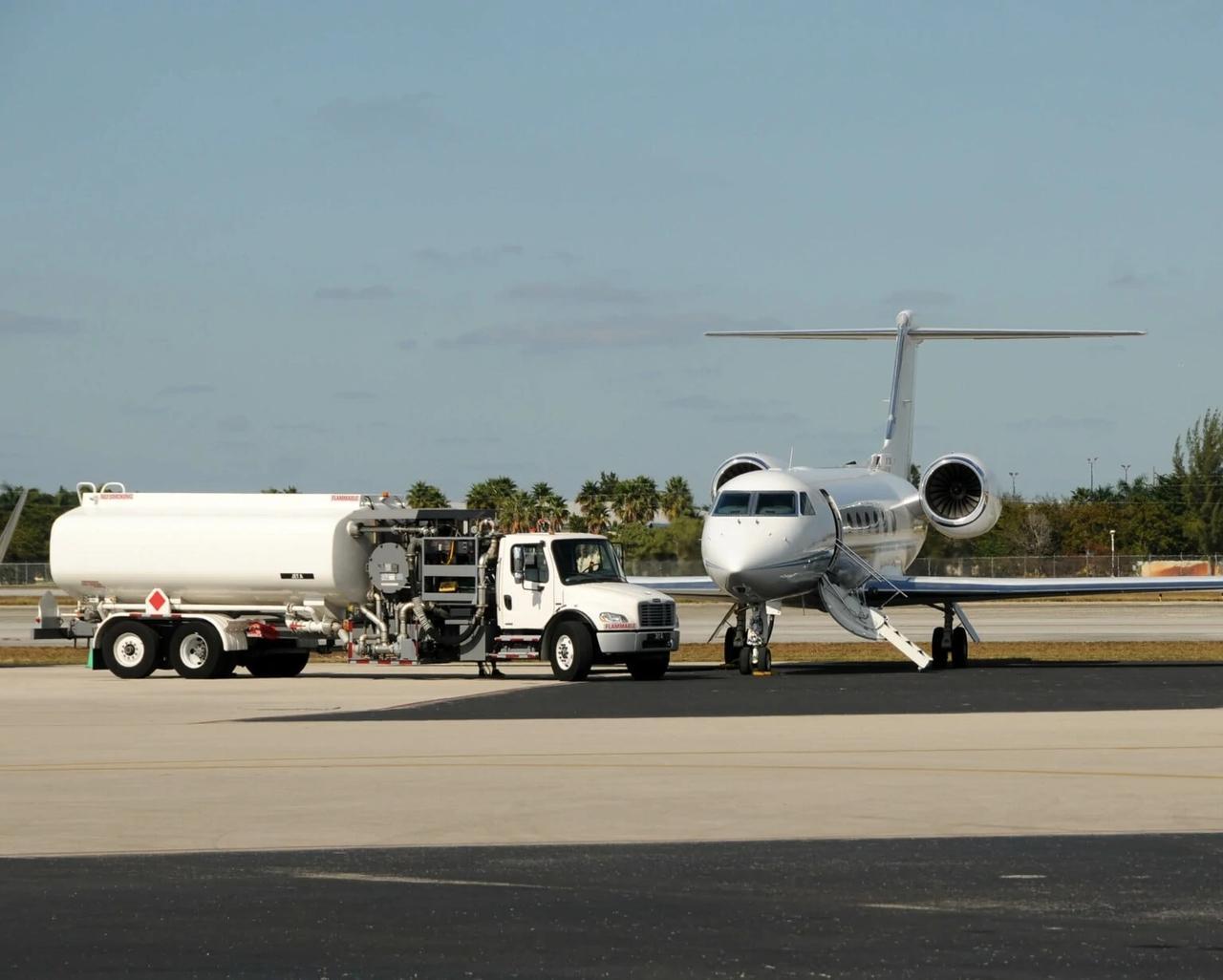
Fuel Stop for Private Jets - Everything You Need to Know
Whether you are flying on a charter flight, participating in a jet card program, or even owning your own aircraft, a fuel stop during a private flight is sometimes a necessity.
Simply put, this is necessary when your destination is farther than the aircraft's maximum range.
So, if a fuel stop is planned for your next flight, here’s everything you need to know—from the time required for refueling to whether you can stay on board or not.
How Much Time Does It Take to Refuel a Private Jet?
As you might expect, there is no definitive answer to the question of how long it takes to refuel a private jet.
However, the general rule of thumb is to expect a fuel stop to take about 30 to 60 minutes.
However, this time cannot simply be added to the total flight time. This 30-60 minute fuel stop is the time the aircraft is on the ramp (also known as the tarmac).
Therefore, it’s important to consider the time needed to deviate from the original route, the time for descent, landing, and taxiing to the stand. After refueling, it's essential to account for the time required to taxi to the runway, take off, climb, and then resume the original route.
As a result, the actual time a fuel stop will add to your trip will likely extend your total travel time by about two hours.
Factors Affecting the Duration of Fuel Stops
So why isn’t there a precise figure regarding how long it actually takes to refuel a private jet?
Well, as is almost always the case with private jets, not all aircraft have the same specifications.
Different aircraft have different sized fuel tanks. Therefore, if the tank is larger, it can hold more fuel, so refueling will take longer.
Additionally, the rate at which fuel is pumped into the aircraft will also vary. This must then be combined with the fact that different fueling equipment can move fuel at different speeds.
Moreover, at each airport, you are at the mercy of the fuel operator. Some are more efficient than others. Some are more organized than others.
If the airport is busy fueling other aircraft, you will have to wait your turn, as the number of fuel trucks is limited.
Finally, one of the most important factors affecting the duration of fueling private jets is how many gallons of fuel are needed. Aircraft are not always fueled to their maximum capacity.
So, if you are only 100 miles from your final destination, it may only take a few hundred gallons of fuel. However, if you are already halfway through your mission and have thousands of miles left to go, it will require much more fuel. The more fuel you need, the longer it will take.
When Are Fuel Stops Necessary?
Essentially, when the total flight distance exceeds the aircraft's range.
So, for example, let’s say you want to fly from London to Bangkok, a distance of nearly 6,000 miles (5,200 nautical miles). Only a select group of jets can complete this mission.
Therefore, if you have a Gulfstream G200, you will require a fuel stop since its maximum range is just under 3,400 nautical miles.
As a result, at some point during the journey, a stop will be necessary. It is physically incapable of flying 2,000 nautical miles at maximum range without stopping.
Are Private Fuel Stops Worth It for Jets?
Ultimately, whether a fuel stop is worth it or not depends on your situation.
If you own a private jet that cannot make the flight nonstop, it may make sense to include a fuel stop. The aircraft belongs to you. You already have fixed costs, so the variable costs of the route will be lower than those of arranging a charter.
Additionally, there are several routes around the world where a fuel stop is required regardless. For instance, you will need to stop for fuel when flying a private jet from London to Sydney.
However, the main reason some travelers may find a fuel stop worthwhile is the price. Yes, you still pay for the aircraft while it is refueling on the ground, but you can charter a smaller jet with a lower hourly cost.
For example, prices for chartering private jets on nonstop flights from London to Bangkok range from £130,000 to £150,000. However, add a refueling stop, and prices could approach £100,000.
Do Passengers Stay On Board During Refueling?
There are rules regarding whether passengers can stay on board during a fuel stop or not.
However, as a general rule, passengers are advised to disembark during refueling.
Of course, it’s important to consider whether you are flying domestically or internationally. If you are on an international flight, you will need to go through customs to leave the airport.
In some cases, it may be convenient if the refueling occurs in the destination country. This way, passengers can maximize their efficiency by clearing customs during the refueling. Then, upon arrival at the final destination, passengers can instantly disembark.
Do Crew Members Stay On Board During Refueling?
It is required that at least one pilot remains on board for the crew. Typically, this will be the second pilot who stays on board.
Summary
There are circumstances when a fuel stop is necessary during a private flight. This is generally true when flying to the other side of the world.
However, the primary function of private jets is to save time. Therefore, adding a fuel stop will cause significant delays to any flight.
The only real benefit of a fuel stop while flying a private jet is the slight reduction in costs. However, adding a fuel stop does not always result in lower expenses.
JETVIP: Beyond the Flight
Join 12,500+ subscribers and stay ahead of the curve.
Scan toopen Telegram