TBM-940 Charter

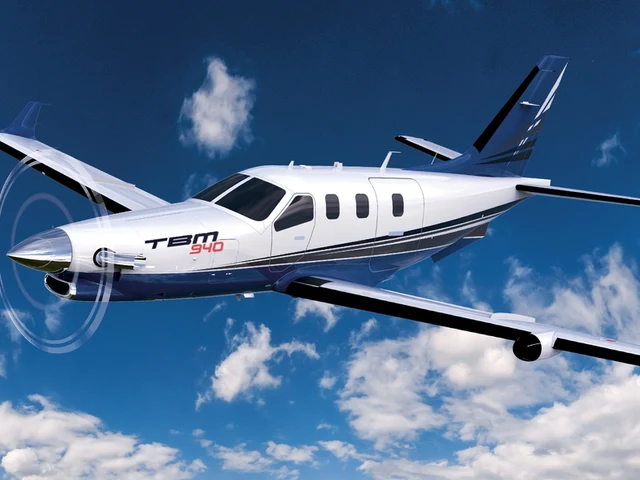
TBM-940 is a premium business-aviation helicopter built for maximum mobility, bypassing road traffic and airport schedules. Used for fast direct transfers between cities, residences, hotels and VIP terminals over distances up to 3,204 km. The cabin seats up to 6 passengers in a VIP configuration with enhanced sound insulation. JETVIP guarantees strict safety and service standards.
Category
Turbo Prop
Very high reliability
92/100
Very high comfort
75/100
Popularity
The latest version of the TBM with automatic control system

Estimated rental price

-

Rent

Capacity

up to 6 pax

Speed

611 km/h

Range

3,204 km

Cabin height

1.22 m

Cabin length

4.05 m

Cabin width

1.21 m

Luggage

0.85 cub.m

Baggage

2 L-bags

Find your scenario

Best Missions

Owner-Operator Travel

Fast trips for owner-operators with high efficiency.
Access to Short Runways

Ideal for smaller airports and remote locations.

Mixed-Use Trips

Business and personal travel with flexibility.

Regional Business Travel

Quick hops between regional destinations.

Practical information about TBM-940

Passenger Experience

  • Compact Pressurized Cabin
  • Club Seating for Four
  • Optional Additional Seating
  • Practical Baggage Space

Airport Flexibility

  • Short Runway Capability
  • Access to Smaller Airports
  • Efficient Ground Operations

Ideal For

  • Owner-Operators
  • Small Flight Departments
  • Business Travelers

Not Ideal For

  • High-Comfort Expectations
  • Frequent Multi-Passenger Flights
  • Twin-Engine Requirements

TBM-940 Specifications

Measurement system:

Technical

Range

3,204 km

Cruise Speed

611 km/h

Service Ceiling

9,449 m

Takeoff weight

3,354 kg

Number of Engines

1

Engine Model

TBM 960

Landing Distance

790 m

Takeoff Distance

835 m

Range at 85%

2,667 km

Landing over 50 ft obstacle

741 m

Takeoff over 50 ft obstacle

725 m

Takeoff roll

725 m

FADEC

Yes

Engine horsepower

850 hp

Fuel tank capacity

1,102 L

Basic operating weight (BOW)

2,100 kg

Useful load

1,180 kg

Fuel capacity (mass)

915 kg

Max landing weight (MLW)

3,186 kg

Max zero-fuel weight (MZFW)

2,736 kg

Max baggage weight

230 kg

Max payload

636 kg

Payload with full fuel tanks

404 kg

Range at 75%

1594

Fuel burn (engines)

140 L/h

Engine flat rating

ISA + 49

Takeoff (5,000 ft / ISA+10)

3475

Cabin and Dimensions

Passenger Capacity

up to 6 pax

Cabin Length

4.05 m

Cabin Width

1.21 m

Cabin Height

1.22 m

Number of Cabin Zones

1

Cabin Volume

3.48 cub.m

Luggage

0.85 cub.m

Baggage

2 L-bags

Standard seating

4 pax

Cockpit seats

2 pax

Lavatory

No

Galley location

MID

Cabin differential pressure

6.2 psi

Galley / refreshment

Refreshment Centre

Cabin altitude (sea-level equivalent)

1337 m

Aircraft Length

10.76 m

Aircraft Height

4.36 m

Wingspan

12.83 m

Avionics & navigation

ADC

2 pcs

FMS

1 x Remote FMS pcs

GPS

1 pcs

MFD

1 pcs

PFD

2 pcs

AHRS

2 pcs

EFIS

2 x GEA-71B

VHF com

2 pcs

VHF navigation

2 pcs

Autopilot

1

Flight deck

Garmin G3000

Transponder

1 pcs

Flight rules

IFR

JETVIP Market Data

Overhaul Interval (TBO)

3500

Approximate Purchase Price

$4,450,000

Certification

FAA / EASA

OEM verification

Un-Verified

DOC per nautical mile

$2.25 $/nm

DOC per seat (per nm)

$0.56 $/nm

Direct operating cost

$744

Aleksandr TolstovOnline now - replies in 15 minutes

Aircraft specifications are just numbers, but your comfort is my job. Message me to discuss the details.

Director of European Office Development (France) Aleksandr Tolstov
Write to me personally Telegram
I will find the perfect solution where others have failed.

Rent price

Approximate rentalcost for popular routes on TBM-940

All prices are estimates. Final costs are subject to real-time aircraft availability and individual mission details. Contact your JETVIP expert for a firm quote and the most competitive market rate for your trip.

No data to display

Calculate flight cost on TBM-940

Instant quotes from certified operators — no commitment.

Description TBM-940

The Daher TBM-940 is a high-performance single-engine turboprop aircraft renowned for its speed, efficiency, and advanced avionics. It's a popular choice for both owner-operators and charter services, offering a compelling blend of comfort and capability for regional and medium-range travel.

Key Features of the TBM-940:

  • Powerful Turboprop Engine: Equipped with a Pratt & Whitney Canada PT6A-66D engine, producing 850 shaft horsepower (shp), enabling high cruise speeds and excellent climb rates.
  • Advanced Avionics Suite: Features the fully integrated Garmin G3000 touchscreen-controlled avionics system, providing advanced navigation, safety, and communication tools.
  • Autothrottle System: The TBM-940 is the first turboprop in its class to offer a standard, factory-installed integrated autothrottle, reducing pilot workload and optimizing engine performance.
  • Automatic Deicing System: Enhances safety in icing conditions by automatically detecting and activating the deicing system.
  • Pressurized Cabin: Ensures a comfortable flight experience at altitudes up to 31,000 feet, allowing passengers to travel above most weather.
  • Comfortable Interior: Typically configured to seat a pilot and up to five or six passengers in a refined cabin with leather seats, climate control, and ample baggage space.

Technical Data (Approximate):

  • Engine: 1 x Pratt & Whitney Canada PT6A-66D (850 shp)
  • Maximum Cruise Speed: 330 knots (611 km/h)
  • Maximum Range: 1,730 nautical miles (3,204 km) with reserves
  • Maximum Approved Altitude: 31,000 feet (9,449 meters)
  • Takeoff Distance (over 50 ft obstacle): 2,380 feet (726 meters)
  • Landing Distance (ground roll): 2,430 feet (741 meters)
  • Cabin Height: 4.0 feet (1.22 meters)
  • Cabin Width: 3.96 feet (1.21 meters)
  • Cabin Length: 13.3 feet (4.05 meters)
  • Typical Seating: 6 (including pilot)

Advantages of the TBM-940:

  • High Speed and Efficiency: Offers jet-like speeds with turboprop economy.
  • Advanced Safety Features: Includes autothrottle, automatic deicing, and Garmin's ESP (Electronic Stability Protection).
  • Reduced Pilot Workload: The integrated avionics and automation systems simplify flight operations.
  • Comfortable and Modern Cabin: Provides a pleasant environment for passengers.
  • Good Range and Payload: Capable of handling a variety of missions.

Chartering a TBM-940 with JETVIP:

The TBM-940 is an excellent choice for charter, offering a fast, comfortable, and efficient travel experience for small groups. Contact JETVIP to explore charter options for the TBM-940 and benefit from its advanced features and performance.

Acquiring a TBM-940:

The TBM-940 is a sought-after aircraft in the owner-operated market. JETVIP can provide expert assistance with all aspects of TBM-940 acquisition, including sourcing, pre-purchase inspections, and transaction management.

Contact JETVIP today to discuss your charter or acquisition interest in the Daher TBM-940 and experience the pinnacle of single-engine turboprop performance and technology.

Aircraft overview · TBM-940

Best Missions

Owner-operator or small flight department flying 300–900 nm trips at high cruise speeds

Accessing shorter or more remote runways where light jets may be constrained

Mixed-utilization travel: business legs plus personal/family trips with limited baggage needs

Practical information

Passenger experience TBM-940

  • Common seating is a 4-seat club; some aircraft add a forward-facing seat or belted lavatory seat depending on interior and certification
  • Entry is via an aft door; verify step/handrail condition and ease of boarding for your passenger mix
  • Baggage volume and access vary by interior and options; confirm what fits for typical trip scenarios (golf bags, skis, etc.)

Avionics & systems TBM-940

  • Confirm avionics baseline and major options (e.g., synthetic vision, lightning detection, satellite weather, ADS-B configuration) and any upgrade paths
  • Review autopilot/flight director performance and maintenance history; verify all modes function correctly during evaluation flight
  • Check for installed safety features (e.g., de-ice/anti-ice capability, oxygen system configuration, any envelope protection features) and confirm they align with typical weather/terrain exposure

Application flexibility TBM-940

  • High annual utilization where turbine reliability and dispatch consistency are valuable, but a light jet’s higher fuel burn and complexity are not justified
  • Regular missions into smaller airports where avoiding airline schedules and repositioning time drives overall trip efficiency

Ideal for TBM-940

  • Owner-operators prioritizing speed and flexibility for regional business travel
  • Pilots transitioning to turbine operations who want a modern avionics environment
  • Operators needing reliable access to smaller airports with consistent IFR capability

Not ideal and less aligned

  • Regularly carrying 5–6 adults with baggage in high-comfort expectations
  • Operations that require multi-engine redundancy for policy or mission reasons
  • Teams needing a larger cabin for frequent multi-passenger work-in-flight
  • Organizations with mandated twin-engine requirements for risk policy or insurance constraints

The DAHER TBM 900 is part of the TBM 900-series evolution that focused on aerodynamic drag reduction, refined engine management, and cockpit integration to deliver fast point-to-point travel with the simplicity of single-engine turbine operations. It is commonly selected for regional and mid-range missions where access to shorter runways and smaller airports matters as much as cruise speed. Compared with light jets, it typically offers lower trip fuel and simpler systems, while accepting a smaller, more intimate cabin and single-engine operating considerations.

The TBM 900 fits missions that value time efficiency without the infrastructure needs of a jet. It excels at two-to-four passenger travel with flexibility to depart from smaller airports closer to the final destination. When missions consistently push maximum passenger load, require a larger cabin for work-in-flight, or demand twin-engine capability for operational policy, alternatives may align better.

The cabin is a compact, pressurized environment typically arranged with club seating for four and optional additional seating depending on configuration. Comfort is best described as premium for a turboprop class but still constrained by a narrow cross-section and limited ability for passengers to move around in flight. Noise levels are generally managed well for the category, but expectations should be set closer to high-end turboprops than midsize jets. Baggage space is practical for light travel but becomes limiting when all seats are occupied.

The TBM 900 pairs a modern integrated avionics suite (commonly Garmin G1000-based with TBM-specific integrations) with automation aimed at reducing workload in single-pilot operations. The design emphasizes straightforward systems, strong situational awareness, and turbine engine management features that support repeatable procedures. For buyers, the key is ensuring the installed avionics and safety options match intended IFR and single-pilot use, and that the aircraft’s software/configuration status is current.

Typical operations involve fast climbs to the flight levels, high-speed cruise in the mid-to-high 200-knot range, and efficient descents into smaller airports. The aircraft is well suited to IFR single-pilot workflows, but real-world utility depends on runway length, temperature/altitude, and icing equipment. Payload-range tradeoffs show up when filling seats and baggage while also carrying full fuel; buyers should map typical passenger counts against stage length and reserve requirements rather than relying on brochure maxima.

  • Very fast cruise for a single-engine turboprop with strong point-to-point utility
  • Access to shorter runways and smaller airports versus many jets
  • Owner-operator friendly cockpit automation and generally straightforward systems
  • Compact cabin limits comfort and baggage when fully occupied
  • Single-engine turbine considerations may not meet all operational policies or passenger preferences
  • Performance and payload margins are sensitive to hot/high conditions, icing equipment, and mission loading

Where TBM-940 aircraft are based

Number of aircraft of this model at each base.
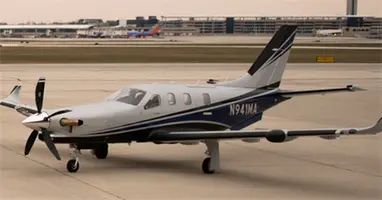
Real jets from certified operators, flying charter missions worldwide.

Our fleet includes 1 TBM-940 available for charter.

Show all aircraft TBM-940

Other aircraft models

Go to catalog Turbo Prop

Frequently asked questions about TBM-940

How many passengers does the TBM-940 carry?
What is the range of the TBM-940?
How much does chartering a TBM-940 cost?
Which airports can the TBM-940 use?
How quiet is the TBM-940's cabin compared to its competitors? What's the noise level in dB?