Private Tupolev Jets: Charter Business Aircraft for Premium Flights

Category
Seats
Luggage volume, m³
Range, km
Dimensions, m
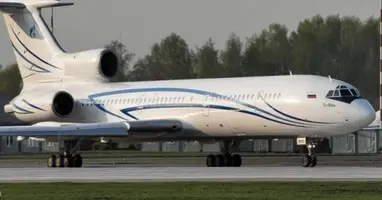
Capacity
up to 180 pax
Cabin height
2.02 m
Flight time
Baggage
Rental price
21,100 € / hour24,911 $ / hour
Estimated cost
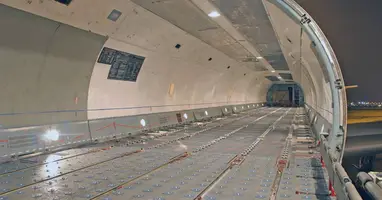
Capacity
up to 210 pax
Cabin height
2.11 m
Flight time
Baggage
Rental price
16,650 € / hour19,667 $ / hour
Estimated cost
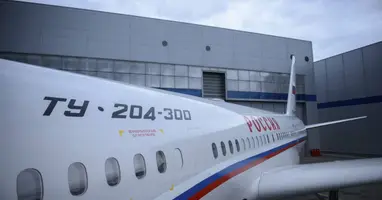
Capacity
up to 65 pax
Cabin height
2.11 m
Flight time
Baggage
Rental price
21,100 € / hour24,911 $ / hour
Estimated cost
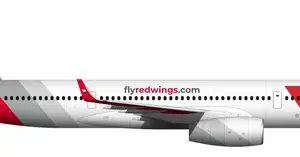
Capacity
-
Cabin height
2.11 m
Flight time
Baggage
Rental price
21,100 € / hour24,911 $ / hour
Estimated cost
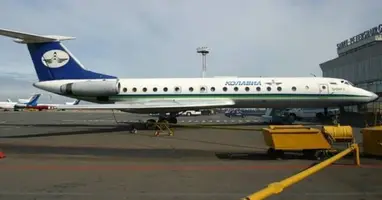
Capacity
up to 96 pax
Cabin height
1.96 m
Flight time
Baggage
Rental price
11,100 € / hour13,111 $ / hour
Estimated cost
JETVIP: Beyond the Flight
Join 12,500+ subscribers and stay ahead of the curve.
Scan toopen Telegram
Tupolev: A Legendary Russian Aircraft Designer with a Century of History
The History and Legacy of the Tupolev Design Bureau
The Tupolev Design Bureau (OKB Tupolev) was founded in 1922 by the outstanding aircraft designer Andrei Nikolaevich Tupolev. Over its nearly century-long history, the Tupolev Design Bureau has become a symbol of Soviet and Russian aircraft construction, producing more than 300 different models and modifications of aircraft, of which about 100 were put into serial production. The total number of aircraft built exceeds 18,000 units.
Key historical achievements:
- Creation of the first Soviet all-metal aircraft ANT-2 (1924)
- Development of the Tu-2 bomber, one of the best aircraft of World War II
- Creation of the first Soviet jet bomber Tu-16
- Development of the Tu-104 – the first Soviet jet passenger aircraft (1955)
- Creation of the supersonic passenger airliner Tu-144 (1968)
Iconic Tupolev Aircraft Models
Military Aviation
- Tu-95 (Bear) – a strategic bomber with turboprop engines, still in service. Uniqueness – a combination of turboprop engines and speeds close to the speed of sound.
- Tu-160 (White Swan) – a supersonic strategic bomber, the world's largest combat aircraft and the most powerful supersonic aircraft in history.
- Tu-22M3 – a long-range supersonic missile-carrying bomber with variable sweep wings.
Civil Aviation
- Tu-104 – the first Soviet jet passenger aircraft, marking a new era in Soviet civil aviation.
- Tu-134 – a short-haul passenger aircraft that was long the basis of the Soviet local airline fleet.
- Tu-154 – a medium-range passenger aircraft that became the most massive Soviet jet airliner (about 1,000 units built).
- Tu-144 – the world's first supersonic passenger aircraft, beating the Concorde in its first flight by two months.
- Tu-204/214 – a family of modern medium-range passenger aircraft comparable in performance to the Boeing 757.
Innovations and Technological Breakthroughs
The Tupolev engineering school has always been distinguished by its innovative approach:
- Use of metal in construction – Tupolev Design Bureau was the first in the USSR to build all-metal aircraft based on Kolchug aluminum (duralumin).
- Aerodynamic purity – a characteristic feature of Tupolev aircraft has always been aerodynamic efficiency.
- Supersonic technologies – Tupolev became a pioneer of supersonic technologies in the USSR, both in military and civil aviation.
- Variable sweep wings – successfully implemented on Tu-22M and Tu-160 bombers.
- Integrated avionics and control systems – the Design Bureau actively introduced digital systems into its aircraft, starting in the 1970s.
Distinctive Features of Tupolev Aircraft
Unlike Western manufacturers and other Soviet/Russian design bureaus, Tupolev aircraft have always been distinguished by:
- High structural strength and increased survivability
- Ability to operate in extreme conditions and on unprepared airfields
- Multi-mode application (many civil aircraft had military modifications)
- Advanced aerodynamic solutions
- The presence of a "reserve" of characteristics for further modernization
Current State and Development Prospects
Since 2006, the Tupolev Design Bureau has been integrated into the United Aircraft Corporation (UAC). The main areas of activity today:
- Modernization of strategic bombers – Tu-160M2 with new avionics, engines and weapons.
- Development of a promising long-range aviation complex (PAK DA) – a new generation strategic bomber with subsonic speed and reduced visibility.
- Development of civil programs – transition to a fully Russian component base for Tu-204/214 and expansion of their production.
- International cooperation – joint projects with foreign partners on modernization and maintenance of the existing aircraft fleet.
- Technological update – introduction of modern design and manufacturing technologies.
Contribution to World Aircraft Construction
Over its nearly century-long history, the Tupolev Design Bureau has set dozens of world records, including speed, payload and flight range records. Tupolev aircraft were operated in more than 40 countries around the world.
Tupolev's legacy remains an important part of world aviation history, and its engineering solutions continue to influence modern aircraft construction, especially in the field of military aviation and specialized aviation complexes.
Save time and get a qualified specialist’s answer to all your questions right now