Regional Travel
Fast point-to-point flights with turboprop access.
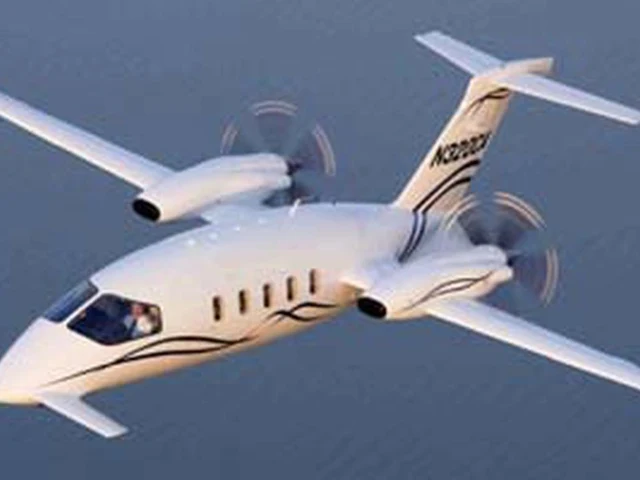

Capacity
up to 9 pax
Speed
737 km/h
Range
2,791 km
Cabin height
1.75 m
Cabin length
4.45 m
Cabin width
1.85 m
Luggage
Baggage
Estimated rental price
5,550 € / hour
6,556 $ / hour
Find your scenario
Fast point-to-point flights with turboprop access.
Jet-like block times with turboprop economics.
Comfortable space for productive work.
Measurement system:
Range
2,791 km
Cruise Speed
737 km/h
Service Ceiling
12,500 m
Takeoff weight
5,466 kg
Number of Engines
2
Engine Model
PT6A-66B
Landing Distance
1000 m
Takeoff Distance
972 m
Start of Production
2005 y
End of Production
2013 y

Rent price
All prices are estimates. Final costs are subject to real-time aircraft availability and individual mission details. Contact your JETVIP expert for a firm quote and the most competitive market rate for your trip.
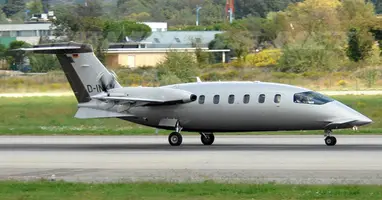
Piaggio Avanti II – Revolutionary Turboprop Performance
The Piaggio Avanti II redefines regional business travel with its unique aerodynamic design, jet-like speed, and exceptional fuel efficiency. This Italian-engineered masterpiece combines turboprop economics with near-jet performance, delivering an unparalleled flying experience.
✔ Speed: 732 km/h (395 knots) – 50% faster than conventional turboprops
✔ Range: 2,593 km (1,400 NM) – Nonstop routes:
• Moscow-Dubai
• London-Tripoli
• Paris-Moscow
✔ Fuel Efficiency: 40% better than comparable jets
✔ Takeoff Distance: 722 m (2,370 ft)
✈ Unique Three-Lifting-Surface Design for optimal performance
✈ Twin Pratt & Whitney PT6A-66B engines (2 × 1,200 SHP)
✈ Advanced Hartzell scimitar propellers for reduced noise
✈ Wing-mounted engines for quieter cabin experience
Stand-up cabin with 1.75 m (5'9") height
Executive club seating for 6-9 passengers
Large cabin windows with panoramic views
Lowest noise levels in class (69 dB)
3.1 m³ (110 ft³) baggage capacity
✈ Rockwell Collins Pro Line 21 suite
✈ Dual Flight Management Systems
✈ Synthetic Vision Technology
✈ Weather radar with turbulence detection
"Our Avanti II cuts travel time significantly while burning less fuel than our previous jet. The cabin comfort surprises everyone who flies with us."
— Marco L., Manufacturing Executive
"After 1,200 hours in various turboprops, the Avanti's speed and handling still amaze me. It's like flying a jet with turboprop costs."
— Captain Sarah K., ATP-rated Pilot
✓ Fastest turboprop in production
✓ Lowest direct operating costs in class
✓ Exceptional short-field capability
✓ Eco-friendly performance (reduced emissions)
Fast point-to-point regional travel where turboprop runway access matters
City-pair missions where jet-like block times are valued but turboprop economics are preferred
Operators needing a stand-up cabin feel for a turboprop class aircraft
The Piaggio Avanti II is a pressurized twin-turboprop designed to deliver cruise speeds closer to light jets while retaining turboprop fuel efficiency and short-field flexibility. Its canard/forward-wing configuration and pusher propellers reduce cabin noise and shift propeller slipstream behind the cabin, shaping a travel experience that differs from conventional turboprops. Buyers typically consider it when they want fast regional or near-transcontinental legs with access to shorter runways and the operating characteristics of a turboprop rather than a jet.
The Avanti II fits owners and operators who want to reduce door-to-door time versus typical turboprops and can use shorter or more constrained airports. It is less aligned with missions that demand consistent maximum payload in adverse runway/temperature conditions or that require the simplest, most standardized turboprop operating footprint across diverse crews.
The cabin is notably tall and wide for the category, with a flat floor and an executive layout that supports comfortable seated work and conversation on typical 1–3 hour sectors. Pusher props help keep the cabin environment comparatively quiet for a turboprop, and large windows support a bright interior. Baggage capacity is generally suitable for business travel loads, but buyers should confirm how much is accessible in-flight and how loading limits interact with fuel for longer legs.
Avanti II systems are aimed at high-speed turboprop operations with business-aviation avionics and automation appropriate for single-pilot or two-pilot use depending on certification and operator policy. The design is unconventional aerodynamically, so procedural discipline (speeds, configuration changes, and engine management) matters for consistent performance and passenger comfort.
In typical use, the Avanti II is flown at high cruise speeds for a turboprop, often at mid-to-high altitudes where it can realize efficient cruise and weather avoidance options. It can be attractive for 600–1,200 nm legs where block-time benefits are meaningful. Real-world economics and dispatch reliability depend heavily on maintenance program status, engine/propeller times, and avionics configuration.
Number of aircraft of this model at each base.
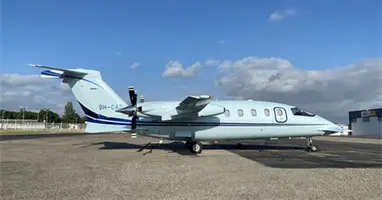
Built / int. refit
2010
Capacity
up to 6 pax
Baggage
Cabin height
1.75 m
Rental price
5,550 € / hour6,556 $ / hour
Estimated cost

Built / int. refit
2012
Capacity
up to 9 pax
Baggage
Cabin height
1.75 m
Rental price
2,000 € / hour2,360 $ / hour
Estimated cost
Built / int. refit
2014
Capacity
up to 9 pax
Baggage
Cabin height
1.75 m
Rental price
2,000 € / hour2,360 $ / hour
Estimated cost
Built / int. refit
2001
Capacity
up to 5 pax
Baggage
Cabin height
1.75 m
Rental price
2,000 € / hour2,360 $ / hour
Estimated cost
Built / int. refit
2009
Capacity
up to 6 pax
Baggage
Cabin height
1.75 m
Rental price
2,000 € / hour2,360 $ / hour
Estimated cost
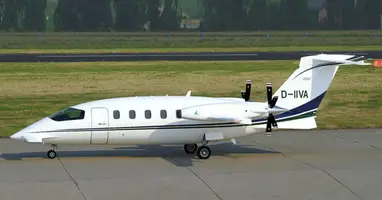
Built / int. refit
2007 / 2015
Capacity
up to 7 pax
Baggage
Cabin height
1.75 m
Rental price
5,550 € / hour6,556 $ / hour
Estimated cost
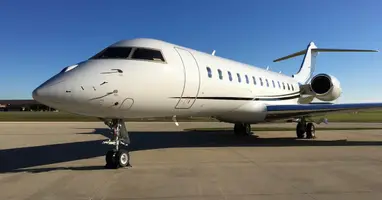
Built / int. refit
2002
Capacity
up to 7 pax
Baggage
Cabin height
1.75 m
Rental price
5,550 € / hour6,556 $ / hour
Estimated cost
Built / int. refit
2008
Capacity
up to 7 pax
Baggage
Cabin height
1.75 m
Rental price
5,550 € / hour6,556 $ / hour
Estimated cost