Regional Business Travel
Efficient travel for 3–5 passengers on short routes.
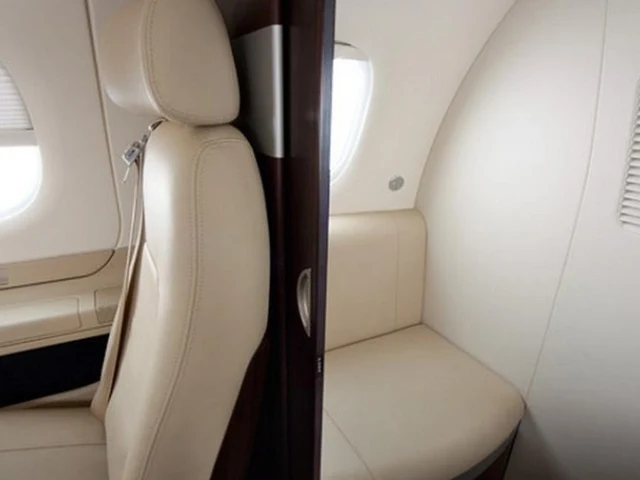

Capacity
up to 6 pax
Speed
748 km/h
Range
2,322 km
Cabin height
1.5 m
Cabin length
3.35 m
Cabin width
1.55 m
Luggage
Baggage
Estimated rental price
5,000 € / hour
5,900 $ / hour
Find your scenario
Efficient travel for 3–5 passengers on short routes.
Access to airports with limited runway lengths.
Quick sector times with simple workflows.
Ideal for single-pilot operations and regional flights.
Measurement system:
FMS
2 pcs
GPS
1 pcs
MFD
2 pcs
PFD
2 pcs
AHRS
1 pcs
VHF com
1 pcs
VHF navigation
1 pcs
Autopilot
1
Flight deck
Prodigy Touch (G3000)
Transponder
1 pcs
Start of Production
2008 y
End of Production
In production
Minimum Total Time (TT)
600
Minimum ask price
$1 795 000
Maximum ask price
$3 500 000
Engine hourly rate
$1,523
Overhaul Interval (TBO)
3500
Overhaul Cost
600 000 $
Hours to mid-life
1 750 h
Mid-Life Cost
150 000 $
Approximate Purchase Price
$4,250,000
Certification
FAA / EASA
OEM verification
VERIFIED
DOC per nautical mile
$2.84 $/nm
DOC per seat (per nm)
$0.71 $/nm
Direct operating cost
$1,152
APU warranty
2000.0 h
Engine warranty (hours)
1000.0 h
Engine warranty (years)
2 years
Airframe warranty (hours)
1000.0 h
Airframe warranty (years)
3 years

Rent price
All prices are estimates. Final costs are subject to real-time aircraft availability and individual mission details. Contact your JETVIP expert for a firm quote and the most competitive market rate for your trip.
The Embraer Phenom 100 is a light business jet aircraft. Manufactured by Embraer, Brazil.
The Embraer Phenom 100 is a light business jet aircraft. Manufactured by Embraer, Brazil. Embraer's Phenom 100E is an updated version of the successful Phenom 100 ultralight jet. This new model features greater cabin comfort with numerous interior trim options, improved braking systems, new multifunction spoilers and the Prodigy cockpit. Capable of carrying four to six passengers on board, this aircraft has the largest luggage compartment and the most spacious cabin in its category, and its performance is on par with large jet aircraft. In addition, it is equipped with the largest portholes in its class, which allows plenty of natural light to flow in, making the cab even more spacious. The interior of the aircraft can be completely redone taking into account all the wishes of the client. The cabin is equipped with premium executive seats that recline, swivel and slide along rails, a wardrobe or sideboard, a closed toilet room with a seat that can be used during takeoff and landing, and additional storage space for luggage.
Despite its small size, the Phenom 100E inherited the reliability of its older brothers - commercial airliners. Including a design resource of 35,000 cycles, a scheduled inspection frequency of 600 hours and simplified access to key components and assemblies for technical personnel in accordance with the requirements of MSG-3 (Maintenance Steering Group - a maintenance coordination council that makes recommendations on the frequency of maintenance, operational safety and other issues. This process is a mandatory component of commercial aircraft programs.)
The Phenom 100E's 8m3 cabin is wider, taller and generally more spacious than the Cessna Citation M2. It is also slightly wider than that of the HondaJet, but the Japanese competitor has more than 30cm longer cabin space. Luggage space has a total of 1.75 m3, including an external storage compartment that can accommodate four pairs of skis in addition to suitcases also a wardrobe in the front of the cabin, with a volume of 0.17 m3.
Single-pilot or two-crew regional business travel with 3–5 passengers
Short-runway and hot-and-high departures where climb and field performance matter
High-frequency day trips with quick sector times and simple operating workflows
The Embraer Phenom 100EV is an evolution of the Phenom 100 family focused on improved hot-and-high performance, climb capability, and runway flexibility while keeping the aircraft in the very light jet class. It targets owner-operators, corporate flight departments needing a compact jet for frequent regional missions, and operators who value a contemporary flight deck and a comfortable cabin footprint relative to many VLJs.
Typical missions are 300–900 nm city pairs where the aircraft’s cruise efficiency, climb profile, and runway access reduce total trip time. It works well for multi-stop schedules and destinations with more restrictive runway or altitude/temperature conditions than some peers. For teams that routinely fly with larger groups, bulky luggage, or want more cabin volume for in-flight work, a light jet or super-light jet may align better.
The cabin is arranged as a compact executive space with a private aft lavatory and a forward refreshment area, aiming to feel more “light jet” than “entry-level.” Seating is typically a four-place club, with optional side-facing or belted lavatory/extra seating depending on configuration. Noise levels and ride comfort are generally competitive for the class, but passengers should still expect a true very light jet cabin: limited aisle space and constrained room for moving about in flight.
The 100EV pairs a modern Garmin-based integrated flight deck with automation aimed at reducing workload for single-pilot operations while retaining robust IFR capability. Systems are designed around simplicity and dispatch reliability rather than bespoke customization. Buyers typically focus on avionics baseline, connectivity options, and how the aircraft is equipped for today’s airspace (performance-based navigation, surveillance, and datalink as applicable).
The aircraft is typically operated as a fast, efficient regional platform: short taxi times, quick climbs to the high 30s/low 40s (conditions permitting), and cruise in the high-300-knot class. It favors missions that value runway flexibility and time savings over maximum cabin volume. Flight planning should account for payload/range tradeoffs typical of VLJs, especially when carrying more passengers, more fuel, and operating from shorter fields or in higher temperatures.
Number of aircraft of this model at each base.
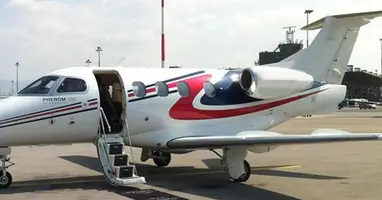
Built / int. refit
2014
Capacity
up to 5 pax
Baggage
Cabin height
1.5 m
Rental price
2,100 € / hour2,478 $ / hour
Estimated cost

Built / int. refit
2011
Capacity
up to 4 pax
Baggage
Cabin height
1.5 m
Rental price
5,000 € / hour5,900 $ / hour
Estimated cost

Built / int. refit
2009
Capacity
up to 4 pax
Baggage
Cabin height
1.5 m
Rental price
5,000 € / hour5,900 $ / hour
Estimated cost
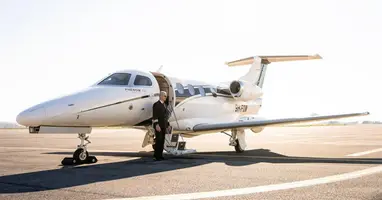
Built / int. refit
2010
Capacity
up to 4 pax
Baggage
Cabin height
1.5 m
Rental price
5,000 € / hour5,900 $ / hour
Estimated cost
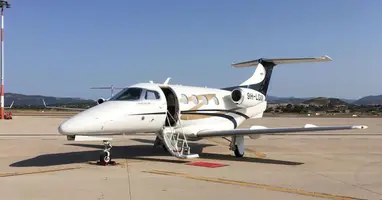
Built / int. refit
2012
Capacity
up to 4 pax
Baggage
Cabin height
1.5 m
Rental price
5,000 € / hour5,900 $ / hour
Estimated cost
Built / int. refit
2010
Capacity
up to 4 pax
Baggage
Cabin height
1.5 m
Rental price
2,100 € / hour2,478 $ / hour
Estimated cost
Baggage
Cabin height
1.5 m
Rental price
2,100 € / hour2,478 $ / hour
Estimated cost
Built / int. refit
2014
Capacity
up to 5 pax
Baggage
Cabin height
1.5 m
Rental price
2,100 € / hour2,478 $ / hour
Estimated cost