Regional Travel
Access to smaller airports reduces total travel time.

Capacity
up to 9 pax
Speed
578 km/h
Range
2,850 km
Cabin height
1.45 m
Cabin length
5.94 m
Cabin width
1.37 m
Luggage
Estimated rental price
5,200 € / hour
6,162 $ / hour
Find your scenario
Access to smaller airports reduces total travel time.
Ideal for airports with limited infrastructure.
Versatile for passenger and light freight transport.
Perfect for high-frequency regional routes.
Measurement system:
Range
2,850 km
Cruise Speed
578 km/h
Service Ceiling
10,668 m
Takeoff weight
6,849 kg
Number of Engines
2
Engine Model
PT6A-60A
Fuel consumption
549 L/h
Landing Distance
757 m
Takeoff Distance
1005 m
Start of Production
1990 y
End of Production
2009 y
Minimum Total Time (TT)
2 274
Minimum ask price
$1 200 000
Maximum ask price
$2 450 000
Engine hourly rate
$145
Overhaul Interval (TBO)
3 600
Overhaul Cost
350 000 $
Hours to mid-life
1 800 h
Mid-Life Cost
175 000 $
Approximate Purchase Price
$2,7-4,5 M USD

Rent price
All prices are estimates. Final costs are subject to real-time aircraft availability and individual mission details. Contact your JETVIP expert for a firm quote and the most competitive market rate for your trip.
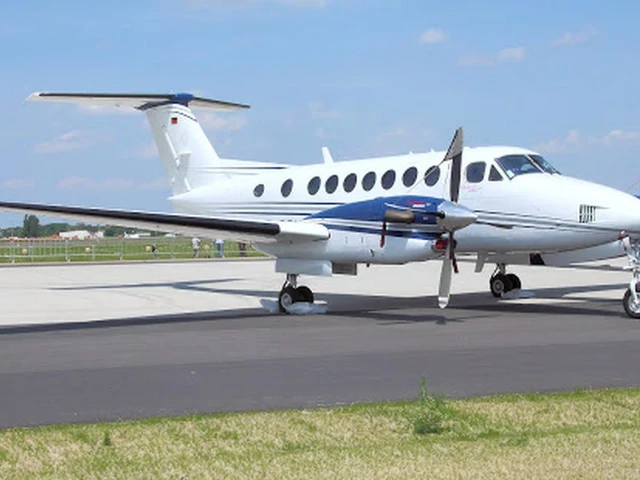
The Beech Model 350 Super King Air is a light multipurpose aircraft developed by the American company BeechAircraft.
The Beech Model 350 Super King Air is a light multipurpose aircraft developed by the American company BeechAircraft. The aircraft is a further development of the King Air family of multipurpose light aircraft. Raytheon offers the latest development of the Super King Air series as the Beechcraft King Air 350 with a longer fuselage, wider wing span and vertical washers that reduce drag. The capacity is 10-16 passengers.
The Beechcraft King Air 350 was in production from 1990 to 2009. In 2008, Beechcraft announced an updated version, the King Air 350i, and an expanded version of the range, the King Air 350ER. Both the Beechcraft King Air 350er (B300CEF) and King Air 350i (B300) are part of the Beechraft's 300 series. The extended range version has been designed for long distance travel. Larger and stronger chassis, increased fuel capacity, and higher gross weight, the King Air 350ER is the best choice for special missions, and other unique needs such as aerial photography, air ambulance, floating, surveillance, preparation, utility / transportation , and more.
Regional and intercity trips where smaller-airport access reduces total door-to-door time
Operations from shorter runways or higher-elevation airports where turbine performance is valued
Multi-role use (passenger transport plus light freight/medical/special-mission equipment)
The Beechcraft King Air 350 is a pressurized, twin-engine turboprop frequently selected for missions that need airline-like dispatch reliability without requiring long paved runways or major-airport infrastructure. It balances cabin volume with strong climb performance and the ability to operate into smaller regional fields, making it a common choice for corporate, government, and special-mission roles.
The 350 fits missions typically in the 300–900 nm range where the combination of pressurization, weather capability, and runway flexibility matters more than pure cruise speed. It can also support mixed passenger/baggage loads and frequent-cycle schedules, but buyers prioritizing maximum speed or a larger, stand-up cabin often look to light or midsize jets.
The King Air 350 cabin is designed for practical comfort: a pressurized environment, relatively low cabin altitude for a turboprop class, and a layout that can be configured for business travel, utility transport, or specialized interiors. Noise and vibration are generally well-managed for the category, though the experience remains distinctly turboprop compared with a jet. Baggage is typically split between internal and external compartments depending on configuration.
Later-production King Air 350 aircraft commonly feature a modern integrated avionics suite with robust IFR capability, coupled autopilot, and contemporary navigation/surveillance features. The overall design emphasizes proven systems and maintainability rather than cutting-edge automation; many examples have been upgraded through avionics retrofits that materially change capability between airframes.
Operators typically use the 350 for high-frequency regional flying, linking smaller airports with reliable IFR capability. Turboprop operating economics can be favorable when missions include shorter legs, frequent climbs/descents, or runways that would limit jets. Real-world performance depends heavily on payload, ISA deviation, altitude, and installed equipment.
Number of aircraft of this model at each base.
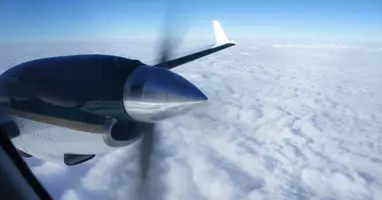
Built / int. refit
2008
Baggage
Cabin height
1.45 m
Rental price
5,200 € / hour6,162 $ / hour
Estimated cost
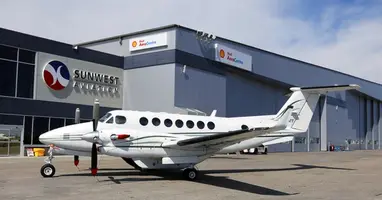
Built / int. refit
1994
Baggage
Cabin height
1.45 m
Rental price
5,200 € / hour6,162 $ / hour
Estimated cost

Built / int. refit
2006
Baggage
Cabin height
1.45 m
Rental price
5,200 € / hour6,162 $ / hour
Estimated cost
Built / int. refit
2012
Baggage
Cabin height
1.45 m
Rental price
5,200 € / hour6,162 $ / hour
Estimated cost

Built / int. refit
1999 / 2017
Capacity
up to 9 pax
Baggage
Cabin height
1.45 m
Rental price
5,200 € / hour6,162 $ / hour
Estimated cost
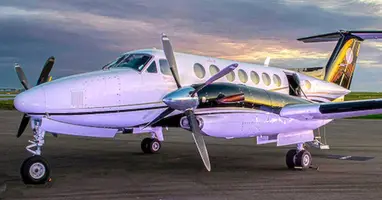
Built / int. refit
2001
Capacity
up to 9 pax
Cabin height
1.45 m
Rental price
2,000 € / hour2,360 $ / hour
Estimated cost
Built / int. refit
2013
Baggage
Cabin height
1.45 m
Rental price
5,200 € / hour6,162 $ / hour
Estimated cost
Built / int. refit
2011
Capacity
up to 8 pax
Cabin height
1.45 m
Rental price
2,000 € / hour2,360 $ / hour
Estimated cost