Regional Business Travel
Frequent legs with varied airport infrastructure.
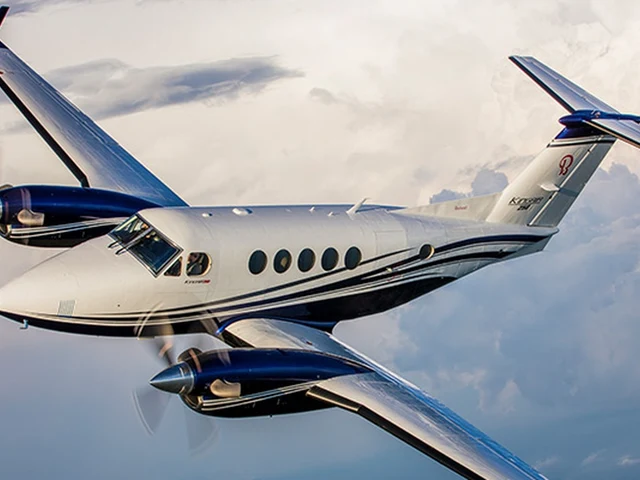

Capacity
up to 8 pax
Speed
574 km/h
Range
2,630 km
Cabin height
1.4 m
Cabin length
5.1 m
Cabin width
1.37 m
Luggage
Baggage
Estimated rental price
5,200 € / hour
6,162 $ / hour
Find your scenario
Frequent legs with varied airport infrastructure.
Handles IFR and adverse weather conditions effectively.
Switch between executive seating and cargo as needed.
Measurement system:
FMS
1 pcs
GPS
1 pcs
MFD
1 pcs
PFD
2 pcs
AHRS
1 pcs
VHF com
2 pcs
VHF navigation
2 pcs
Autopilot
1
Flight deck
Rockwell Collins Pro Line Fusion
Transponder
1 pcs
Flight rules
IFR
Overhaul Interval (TBO)
3600
Approximate Purchase Price
$6,450,000
Certification
FAA / EASA
OEM verification
VERIFIED
DOC per nautical mile
$4.30 $/nm
DOC per seat (per nm)
$0.72 $/nm
Direct operating cost
$1,333

Rent price
All prices are estimates. Final costs are subject to real-time aircraft availability and individual mission details. Contact your JETVIP expert for a firm quote and the most competitive market rate for your trip.
Regional business travel with frequent legs and varied airport infrastructure
Operations needing robust climb and weather capability (IFR, icing-equipped configurations where installed)
Multi-role use: executive seating one day, light cargo/medical or mixed passenger loads the next (configuration dependent)
The Beechcraft King Air 260 is a pressurized twin-turboprop positioned for operators who want King Air operating flexibility with an updated avionics suite and performance tailored to regional point-to-point flying. It fits missions where runway access, climb performance, and multi-role cabin use matter as much as cruise speed, while retaining the familiar King Air handling and systems architecture many flight departments and commercial operators already support.
The 260 is typically selected for repeatable regional missions with payload flexibility and access to shorter or more constrained runways than many jets prefer. It is also a practical platform for operators balancing passenger comfort with utility needs such as baggage volume, special mission equipment, or quick reconfiguration—subject to the specific interior and certification basis of the aircraft.
Cabin experience is characterized by a pressurized, stand-up-not-required environment with club-style seating options and a practical aisle width for in-flight movement relative to many small turboprops. Noise and vibration levels are typical of the class and are strongly influenced by propeller condition, balancing, and interior specification. Baggage and loading flexibility are key strengths, especially for mixed passenger-and-gear missions.
The King Air 260 emphasizes a modern integrated cockpit and systems monitoring intended to reduce workload and improve situational awareness in single- and multi-leg IFR operations. The design philosophy favors proven turboprop systems paired with contemporary avionics, aiming for predictable dispatch and training continuity for operators already familiar with the King Air family.
In operation, the 260 typically supports frequent cycles and short turnarounds, with turboprop economics and performance that can favor smaller airports and shorter stage lengths. Real-world trip efficiency is driven by climb/cruise selection, winds aloft, runway elevation/temperature, and payload. Many operators value the ability to keep schedules moving when runway length, ramp access, or ground infrastructure would be limiting for light jets.
Number of aircraft of this model at each base.
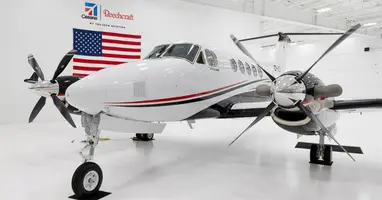
Built / int. refit
2023
Capacity
up to 6 pax
Baggage
Cabin height
1.4 m
Rental price
5,200 € / hour6,162 $ / hour
Estimated cost
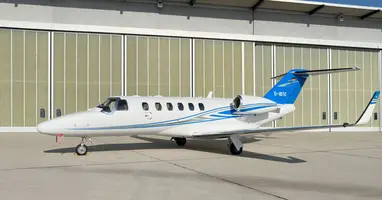
Built / int. refit
2023
Capacity
up to 6 pax
Baggage
Cabin height
1.4 m
Rental price
5,200 € / hour6,162 $ / hour
Estimated cost
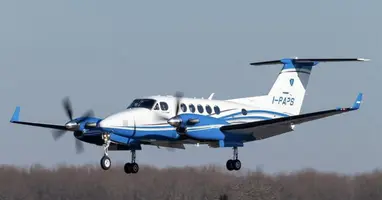
Built / int. refit
2022
Capacity
up to 6 pax
Baggage
Cabin height
1.4 m
Rental price
5,200 € / hour6,162 $ / hour
Estimated cost