Overwater Missions
Reliable travel with three-engine redundancy for safety.
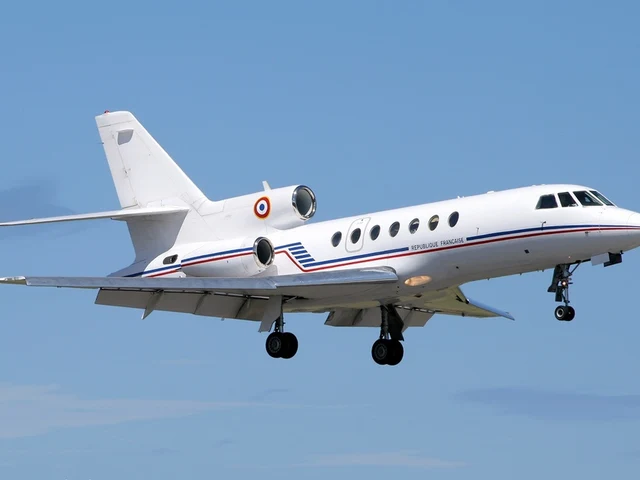

Capacity
up to 9 pax
Speed
850 km/h
Range
6,300 km
Cabin height
1.77 m
Cabin length
7.41 m
Cabin width
1.83 m
Luggage
Baggage
Estimated rental price
8,000 € / hour
9,440 $ / hour
Find your scenario
Reliable travel with three-engine redundancy for safety.
Nonstop or one-stop flights for 6–9 passengers.
Access to airports with shorter runways and operational constraints.
Ideal for intercontinental and transoceanic routes.
Measurement system:
Range
6,300 km
Cruise Speed
850 km/h
Service Ceiling
13,800 m
Takeoff weight
14,600 kg
Number of Engines
3
Engine Model
Honeywell TFE731-3-1C/TFE731-40

Rent price
All prices are estimates. Final costs are subject to real-time aircraft availability and individual mission details. Contact your JETVIP expert for a firm quote and the most competitive market rate for your trip.
Regular overwater or remote-region missions where three-engine redundancy and routing flexibility matter
Nonstop or one-stop business travel with 6–9 passengers plus baggage on longer legs
Airports with shorter runways or operational constraints where performance margins are valuable
The Falcon 50 is a classic Dassault tri‑jet designed to combine intercontinental-style legs with access to a wider set of airports than many contemporaries. Its defining attributes are a third engine for added redundancy on remote and overwater routings, a wing optimized for higher-altitude cruise, and a systems philosophy aimed at dependable dispatch in varied weather and runway conditions. Today it typically appeals to operators who value range and routing flexibility in a proven airframe, and who are comfortable with legacy avionics and cabin standards relative to newer designs.
In practical use, the Falcon 50 fits missions that mix longer stage lengths with airport access needs, including island, northern, or developing-region operations where alternates and weather can drive conservative planning. It can be an effective tool for transoceanic or transcontinental routing with appropriate equipment and approvals. It is less compelling when the mission is dominated by short hops, high-frequency charter-style cycles, or when passengers expect modern cabin amenities and low acoustic levels without upgrades.
Cabin layout typically supports a club seating arrangement with an additional seating group aft, plus an enclosed lavatory. The cabin is generally regarded as comfortable for midsize-to-large-cabin class travel of its generation, with good baggage capacity and the ability to carry coats and catering equipment. Noise levels, cabin electronics, and connectivity depend heavily on refurbishment and avionics/cabin retrofit history; many aircraft have been updated with modern interiors and in-cabin power, while others remain largely original.
The Falcon 50 reflects an earlier generation of Dassault design: robust systems, strong high-altitude performance, and a flight deck originally centered on analog instruments with later digital upgrades available. Many aircraft have been retrofitted with modern navigation, surveillance, and flight management features to meet current airspace mandates and improve workload, but the fleet is not standardized. The buying focus is less about a single factory avionics baseline and more about the specific upgrade path and documentation of the individual airframe.
Operationally, the Falcon 50 is often used for longer legs at high cruise altitudes with passenger loads in the typical business-jet range. The tri‑jet architecture can support conservative planning for remote routing, but it also brings additional engine-related inspection and support considerations versus a comparable twin. Dispatch reliability and trip economics depend strongly on engine program status, maintenance tracking quality, and how extensively the aircraft has been modernized. For many operators, the aircraft is most compelling when flown enough to justify dedicated support and disciplined maintenance planning, rather than occasional discretionary use.
Number of aircraft of this model at each base.
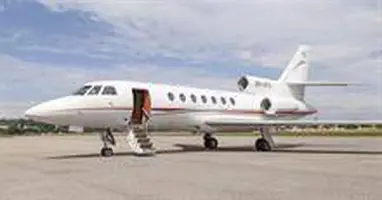
Built / int. refit
1988 / 2020
Capacity
up to 10 pax
Baggage
Cabin height
1.77 m
Rental price
8,000 € / hour9,440 $ / hour
Estimated cost
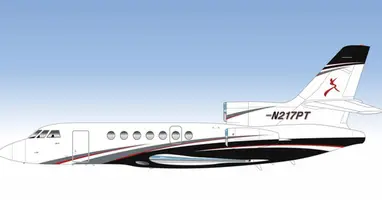
Built / int. refit
1986
Capacity
up to 9 pax
Baggage
Cabin height
1.77 m
Rental price
8,000 € / hour9,440 $ / hour
Estimated cost
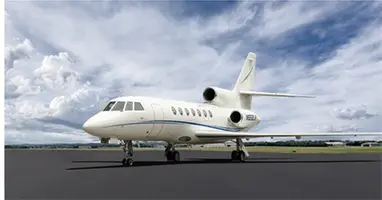
Built / int. refit
1993
Capacity
up to 8 pax
Baggage
Cabin height
1.77 m
Rental price
8,000 € / hour9,440 $ / hour
Estimated cost
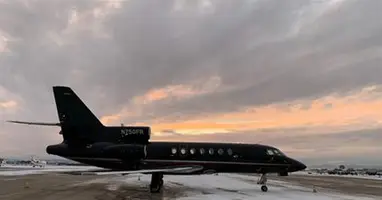
Built / int. refit
1983 / 2012
Capacity
up to 8 pax
Baggage
Cabin height
1.77 m
Rental price
8,000 € / hour9,440 $ / hour
Estimated cost
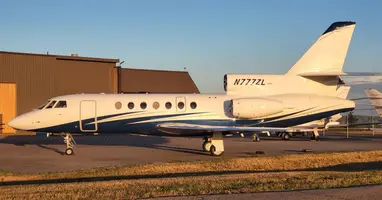
Built / int. refit
1981 / 2016
Capacity
up to 9 pax
Baggage
Cabin height
1.77 m
Rental price
8,000 € / hour9,440 $ / hour
Estimated cost
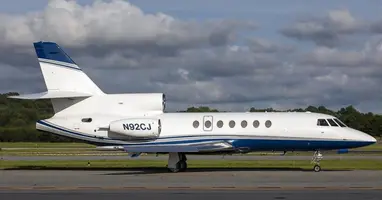
Built / int. refit
1982 / 2016
Capacity
up to 9 pax
Baggage
Cabin height
1.77 m
Rental price
8,000 € / hour9,440 $ / hour
Estimated cost
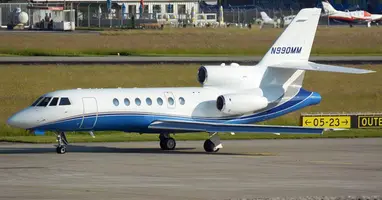
Built / int. refit
1982 / 2017
Capacity
up to 9 pax
Baggage
Cabin height
1.77 m
Rental price
8,000 € / hour9,440 $ / hour
Estimated cost

Built / int. refit
1986 / 2022
Capacity
up to 9 pax
Baggage
Cabin height
1.77 m
Rental price
8,000 € / hour9,440 $ / hour
Estimated cost