Regional Trips
Ideal for door-to-door flights with 4–7 passengers.
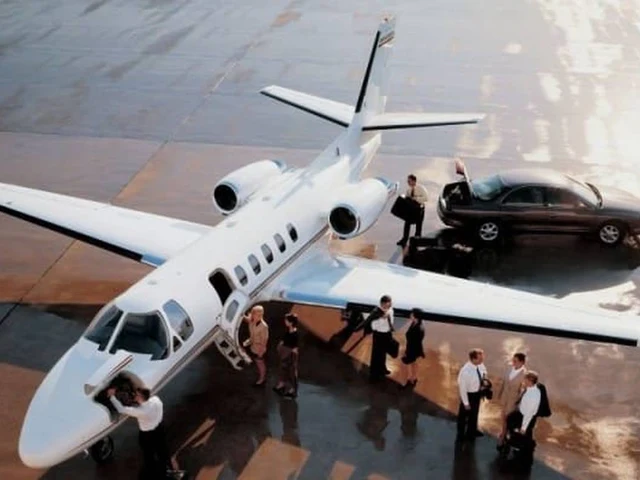

Capacity
up to 7 pax
Speed
746 km/h
Range
3,720 km
Cabin height
1.45 m
Cabin length
4.06 m
Cabin width
1.47 m
Luggage
Baggage
Estimated rental price
5,550 € / hour
6,556 $ / hour
Find your scenario
Ideal for door-to-door flights with 4–7 passengers.
Perfect for airports with shorter runways.
Great for small flight departments seeking easy management.
Measurement system:
Range
3,720 km
Cruise Speed
746 km/h
Service Ceiling
13,720 m
Takeoff weight
6,713 kg
Number of Engines
2
Engine Model
PW530A
Fuel consumption
473 L/h
Landing Distance
785 m
Takeoff Distance
1280 m
Start of Production
1997 y
End of Production
2006 y
Minimum Total Time (TT)
3 278
Minimum ask price
$800 000 $
Maximum ask price
$2 750 000
Engine hourly rate
$125
Overhaul Interval (TBO)
4 000
Overhaul Cost
650 000 $
Hours to mid-life
2 000 h
Mid-Life Cost
325 000 $

Rent price
All prices are estimates. Final costs are subject to real-time aircraft availability and individual mission details. Contact your JETVIP expert for a firm quote and the most competitive market rate for your trip.
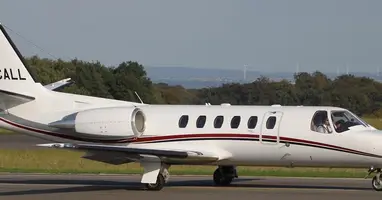
The Cessna Citation Bravo (Model 550) is a light business jet developed and manufactured by the American company Cessna Aircraft Company (now part of Textron Aviation). The model represents an improved version of the Citation II, which first took flight in 1991 and was officially put into service in 1997. Production of the Citation Bravo continued until 2006, when it was succeeded by more modern models in the Citation family.
The Citation Bravo was the result of evolutionary development of the popular Citation II line and earned a reputation as an exceptionally reliable, economical, and easy-to-operate business jet. This aircraft was ideally suited for corporate use, charter operations, and owner-pilots, thanks to its versatility and impressive value proposition.
Production Data:
Technical Specifications:
Cabin Dimensions:
Operational Characteristics:
A key difference between the Citation Bravo and its predecessor, the Citation II, was the installation of new Pratt & Whitney Canada PW530A engines, which provided improved fuel efficiency, reduced noise levels, and better performance at higher altitudes. These engines were equipped with a Full Authority Digital Engine Control (FADEC) system, significantly simplifying pilot workload.
The Citation Bravo was equipped with advanced (for its time) Honeywell Primus 1000 avionics, including integrated digital displays, color weather radar, radio altimeter, Ground Proximity Warning System (GPWS), and an optional Traffic Collision Avoidance System (TCAS). This system significantly enhanced flight safety and reduced pilot workload.
The Bravo's interior received significant improvements compared to the Citation II, including more ergonomic seats, improved sound insulation, and more contemporary finishes. The standard configuration featured a club seating arrangement of four chairs in the main cabin area, with an additional side-facing couch or seats in the forward section of the cabin.
One of the Citation Bravo's main advantages was its ability to operate from short (from 3,820 ft/1,164 m) runways, providing access to thousands of smaller airports inaccessible to larger business jets. Additionally, the aircraft could be a single pilot (with appropriate certification), significantly reducing operating costs for owners.
The Citation Bravo inherited its predecessors' reputation for exceptional reliability with high dispatch reliability rates. The simplicity of design and accessibility for maintenance made this model a popular choice for small companies and charter operators. The intervals between scheduled maintenance were 150 flight hours, which was an impressive figure for its time.
The Hawker 400XP (originally Beechjet 400) was one of the main competitors to the Citation Bravo in the light business jet category:
The Learjet 31A, manufactured by Bombardier, was another strong competitor in the light business jet segment:
The Citation CJ3, a later model from Cessna in the CitationJet family, represented the next generation of light business jets:
The Citation Bravo represented an improved version of the Citation II:
Although production of the Citation Bravo ceased in 2006, many of these aircraft continue to operate successfully worldwide, testifying to their exceptional durability and reliability. On the secondary market, the Citation Bravo remains a popular choice for medium-sized companies, charter operators, and private owners seeking an economical and reliable business jet.
The modern Citation CJ3+ and CJ4 can be considered spiritual successors to the Citation Bravo, offering a similar design philosophy with an emphasis on reliability, ease of operation, and economy, but with modern technologies and improved characteristics.
The Citation Bravo left an important mark in the history of business aviation, demonstrating that a business jet can be simultaneously affordable, reliable, and economical, making the advantages of private aviation accessible to a wider range of users.
Contact JETVIP today to discuss your charter or acquisition needs for the Cessna Citation Bravo. Their experienced team can provide you with detailed information on available aircraft and assist you throughout the process.
Regional point-to-point trips with 4–7 passengers plus baggage
Airports with shorter runways or hot/high conditions where climb performance matters
Owner-operators and small flight departments seeking a conventional, easy-to-manage light jet
The Citation Bravo is a twin‑engine light business jet positioned between entry-level Citations and larger light/midsize platforms. It is typically selected for 4–7 passenger missions where access to shorter runways and predictable operations matter more than maximum cabin volume. Compared with earlier Citation II variants, the Bravo’s higher-thrust engines and aerodynamic refinements are aimed at improved climb and hot/high performance, while keeping a conventional systems layout and pilot-friendly handling.
In real use, the Bravo is most efficient on short to mid-length legs where block times and airport access drive value. It can cover longer segments, but payload, reserves, and seasonal winds can make the longest missions less practical versus newer or larger jets. If your typical day involves multiple short hops, quick climbs, and consistent dispatch from a variety of airports, the Bravo aligns well.
The cabin is a classic light-jet cross-section: a compact aisle with club-style seating common, adequate headroom for seated comfort, and a focus on practicality rather than spaciousness. Noise levels and ride quality are typical for its generation; passenger comfort is strongly influenced by interior condition, refurbishment history, and insulation upgrades. Baggage is generally manageable for soft bags and typical business travel loads, with loading convenience dependent on the specific aircraft’s interior and baggage arrangement.
The Bravo reflects a conventional Citation philosophy: robust systems, familiar procedures, and avionics that may range from original analog/early EFIS to modern retrofits depending on the tail. Many aircraft have been upgraded to meet current navigation and surveillance requirements, but capability is not uniform across the fleet. For buyers, the key is verifying the installed avionics suite and how it supports your operating environment (terminal procedures, RVSM status if equipped, and modern datalink expectations).
The Bravo is typically operated by owner-pilots and small crews in regional business aviation patterns: day trips, multi-leg schedules, and moderate stage lengths. Its runway performance and climb capability support access to a broad set of airports, which can reduce ground transfers and improve scheduling. Operating costs and downtime are strongly shaped by engine program status (if any), maintenance planning, and avionics configuration; aircraft with well-documented upkeep and common modifications tend to be simpler to integrate into a flight department.
Number of aircraft of this model at each base.
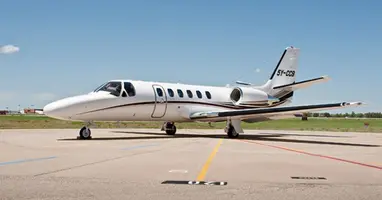
Built / int. refit
2004
Baggage
Cabin height
1.45 m
Rental price
3,200 € / hour3,776 $ / hour
Estimated cost
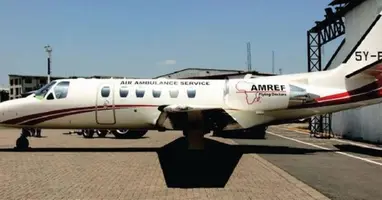
Built / int. refit
2004
Baggage
Cabin height
1.45 m
Rental price
3,200 € / hour3,776 $ / hour
Estimated cost
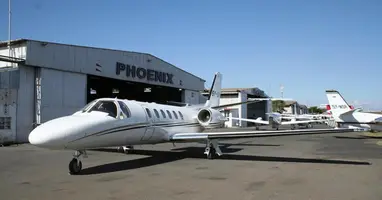
Built / int. refit
2001
Capacity
up to 7 pax
Baggage
Cabin height
1.45 m
Rental price
3,200 € / hour3,776 $ / hour
Estimated cost
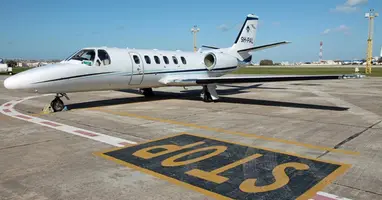
Built / int. refit
2000 / 2015
Capacity
up to 8 pax
Baggage
Cabin height
1.45 m
Rental price
5,550 € / hour6,556 $ / hour
Estimated cost
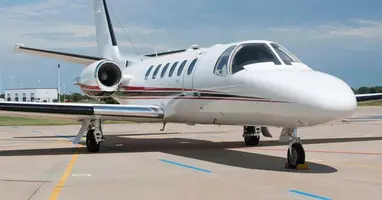
Built / int. refit
2002 / 2022
Capacity
up to 8 pax
Baggage
Cabin height
1.45 m
Rental price
5,550 € / hour6,556 $ / hour
Estimated cost
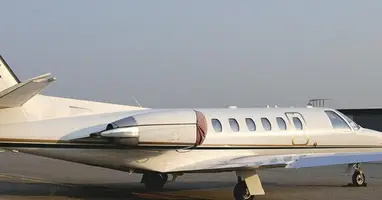
Built / int. refit
1998
Capacity
up to 7 pax
Baggage
Cabin height
1.45 m
Rental price
3,200 € / hour3,776 $ / hour
Estimated cost
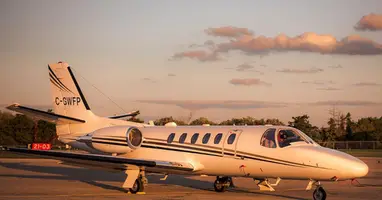
Built / int. refit
2002 / 2019
Capacity
up to 8 pax
Baggage
Cabin height
1.45 m
Rental price
5,550 € / hour6,556 $ / hour
Estimated cost
Built / int. refit
1998
Capacity
up to 8 pax
Baggage
Cabin height
1.45 m
Rental price
3,200 € / hour3,776 $ / hour
Estimated cost