Regional Business Hops
Fast climbs and weather capability for short trips.

Year built (YOM)
1980
Refit years
2015 / 2015
Passengers
5 seats
Serial number (MSN)
31T-8004018
Luggage
Registration country
United States of America
Estimated rental price
5,200 € / hour
6,162 $ / hour
Find your scenario
Fast climbs and weather capability for short trips.
Access to airports with shorter runways than jets.
Ideal for pilots seeking turbine performance.
Measurement system:
Range
2,739 km
Cruise Speed
393 km/h
Service Ceiling
8,840 m
Takeoff weight
4,082 kg
Number of Engines
2
Engine Model
Pratt & Whitney Canada PT6A-28
Landing Distance
484 m
Takeoff Distance
436 m
Passenger Capacity
up to 8 pax
Cabin Volume
5 cub.m
Luggage
0.28 cub.m
Aircraft Length
10.57 m
Aircraft Height
3.89 m
Wingspan
13.01 m

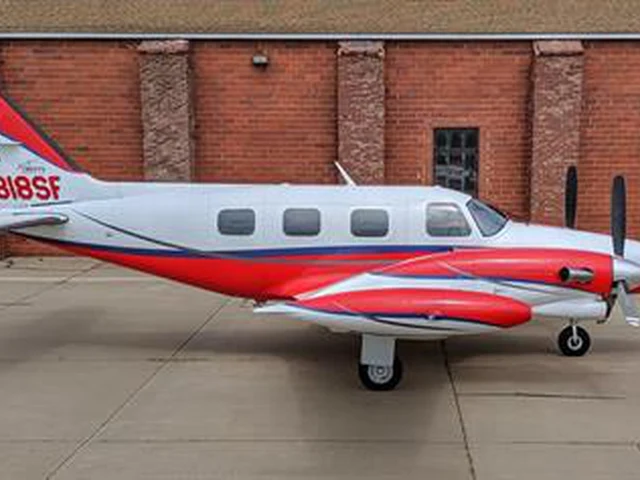
Cheyenne I with tail number N818SF (serial number 31T-8004018) belongs to the Turbo Prop class and is Crotts Aircraft Service, Inc. The aircraft is based at (LAX, United States) and is available for commercial charter.
The registration prefix N indicates that the aircraft is registered in United States of America. The first letters of any tail number correspond to the country’s aviation registry.
Charter availability for this aircraft is provided by Crotts Aircraft Service, Inc. However, clients can book this jet directly through JETVIP — a professional international charter brokerage platform. We negotiate with operators, secure the best available terms, track real-time availability and ensure competitive and transparent pricing for our clients.
The Cheyenne I holds a popularity rating of 2.7 out of 5 and a reliability rating of 70.0 out of 100 according to the JETVIP Reliability Index , reflecting strong demand and operational stability in the charter market.
The aircraft was manufactured in 1980. The cabin interior was updated in 2015. The exterior was updated in 2015.
Cheyenne I N818SF accommodates up to 5 passengers. The baggage compartment volume of 0.28 m³ . The maximum flight range reaches 2739 km, depending on payload and weather conditions.
The aircraft is powered by 2Pratt & Whitney Canada PT6A-28 engines , ensuring efficiency and reliability on long-distance routes.
To check the availability and charter rates of N818SF, contact JETVIP — we will provide the best offer tailored to your trip.
Regional business hops where turbine climb and weather capability matter
Operations into shorter or higher-elevation runways compared with many light jets
Owner-operators or small flight departments seeking a pressurized turbine step-up from pistons
The Piper Cheyenne I is an early-generation, pressurized twin-turboprop aimed at operators who want turbine reliability and climb performance without moving into larger cabin-class turboprops. It is commonly used for regional business trips, owner-flown missions with training and discipline, and utility roles that benefit from good runway flexibility and strong short-field acceleration relative to many light jets. Cabin size and payload-range trade are central: it can move a small group efficiently, but loading for passengers, bags, and fuel requires planning.
A good match for 200–500 nm trips, day-return travel, and multi-stop routing where quick climbs and pressurization reduce workload and fatigue versus piston twins. It is less suited to buyers who prioritize cabin space, high cruise speed, or long nonstop legs; these missions typically favor larger turboprops or light jets.
The Cheyenne I’s cabin is compact and pressurized, typically arranged for a small number of passengers with club-style seating common. Expect a functional, businesslike interior rather than a large-cabin environment. Noise and vibration levels are typical of older turboprops and vary significantly with insulation, prop condition, and interior refurbishment. Baggage capacity is adequate for light-to-moderate loads, but bulky items can be limiting depending on configuration.
Cheyenne I aircraft span eras of analog instrumentation through modern glass retrofits. The airframe is straightforward and proven, while avionics, autopilot capability, and engine instrumentation can range from basic to highly upgraded. For buyers, the specific aircraft’s equipment list and integration quality matter more than the type itself, especially for IFR workload management and dispatch consistency.
The Cheyenne I is generally operated as a short-to-mid-range, pressurized turboprop with strong climb and solid cruise efficiency for its class. Typical utilization favors multi-leg days and varied airport access. Economic outcomes tend to be driven by how often turbine advantages (climb, speed versus pistons, dispatch in weather) are actually used, and by how well engine and prop conditions align with the planned annual hours.
Rent price
The cost is calculated for a one-way flight for 3 passengers based on historical data for this type of aircraft. The final price will be offered by the manager.