Tax on Private Jets in Europe
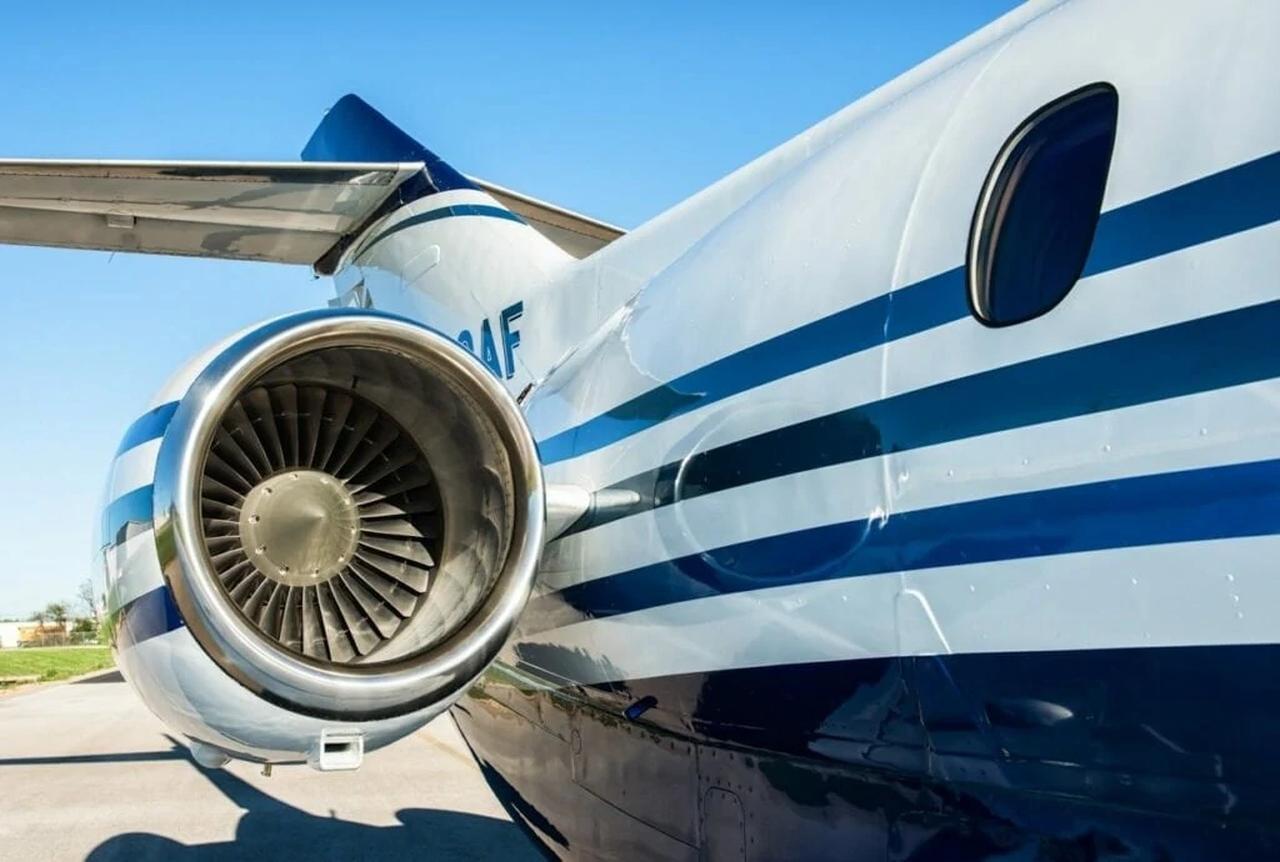
Private jets are expensive assets and, as a result, they are subject to various taxes. Therefore, it is essential to know and understand the different forms of taxation that may apply to private jets. Whether you are renting, owning, or managing a private jet, different forms of taxation come into play.
Several categories of taxes become relevant when considering taxes applicable to private jets, such as luxury tax, value-added tax (VAT), excise duty, jet fuel tax, and so on.
Customs Duty and Value-Added Tax
A plane entering the territory of the European Union is considered to be “imported into the European Union” and, therefore, is subject to so-called import duties. Entry into the territory of the European Union can occur through the sale or lease of the aircraft or simply by crossing the external border of the European Union.
In the European Union, import duties can primarily be divided into two types: customs duty and value-added tax (VAT). The importer is responsible for paying the customs duty and VAT.
Aircraft used for personal purposes and operators of private jets may be eligible for exemption from customs duty and VAT under certain conditions, which are detailed below.
Customs Duty in the European Union
Applicable Legislation: When determining the amount of customs duty payable in the European Union, it is necessary to consider the Common Customs Tariff of the European Union and the Union Customs Code (UCC), which has been in effect since May 1, 2016.
Temporary and Permanent Import: As a general rule, all aircraft imported into the European Union must arrive at or depart from a designated customs airport. Two situations arise at the designated airport:
- Firstly, the importer may seek exemption from customs duty on the grounds that the aircraft is being temporarily imported into the European Union or on the basis of an exemption from final use.
- Secondly, the importer may pay customs duty, which ranges from 2.7% to 7.7% for an imported aircraft that will be brought in on a permanent basis.
Under the temporary import provisions, the UCC allows that, under certain conditions, an aircraft may enter the European Union without any required customs documentation and may exit the European Union without paying VAT or any other import duties. This can also be referred to as a situation where the aircraft is entitled to temporary admission (TA).
Exemption for Private Jet Importers: Private jet importers can obtain exemption from this tax if the criteria listed below are met. It is not sufficient to meet only some of these conditions. Each condition is necessary to claim TA.
Aircraft Registration:
- Place of registration: Registered outside the customs territory of the European Union.
- Owner of registration: The registration belongs to a person outside the customs territory of the European Union.
Use of the Aircraft:
- Purpose of use: The aircraft must be used for personal purposes.
- By whom it is used: The aircraft must be used by a person who:
- Is not a resident of the EU.
- Resides in the country where the aircraft is registered.
- Third parties authorized to use the aircraft by the owner or lessee of the aircraft.
Availability of the Aircraft:
- General rule: The aircraft is not available to residents of the European Union within the European Union.
- Exception to the general rule: The aircraft may be available to EU residents within the borders of the European Union if permitted or used by the owner or lessee of the aircraft.
Time of Stay in the European Union:
- The aircraft must spend more than 6 months in the European Union within a 12-month period.
- As a rule, there is some confusion regarding what constitutes “private use,” which is an important condition for exemption from customs duty. Even among customs authorities in the European Union, there has not been uniformity in applying for exemptions due to different interpretations of what is meant by private use. To clarify this, the European Commission issued a working document on November 23, 2014, on this matter. The following conclusions were drawn:
- “Private use” of an aircraft may include:
- Corporate flights
- Group charters in certain situations
- For “private use,” the following may be allowed on board the aircraft:
- Marketing materials and corporate documents are permitted on board. These documents are not considered cargo or freight, which could lead to the conclusion that the flight is commercial.
- With some restrictions, EU residents are also allowed on board.
The following important points pertain to customs duties in the EU member states discussed below.
France
- France follows the general customs duty rules outlined above and does not impose any additional requirements necessary for an aircraft to qualify for temporary import. There are no local interpretations of these general rules applied by the French tax authorities.
- The understanding of “private use” and “commercial use” in France is based on the definitions of these terms.
- Private use is the use of vehicles for purposes other than commercial use.
- Commercial use consists of two main categories. Firstly, the use of vehicles to transport people from one place to another for a fee. Secondly, the use of vehicles to transport industrial or commercial goods. In this second category, there is no requirement that goods be transported in exchange for payment.
- The French customs authorities emphasize the name under which the flight is organized to determine whether it is a public or private flight. Flights organized for one person but in the name of another are considered public transport. On the other hand, flights organized for the same person and in their name are considered private transport.
Germany
- Importers wishing to enter Europe through Germany must ensure they use an airport with a permanent customs authority. This is important because most airports in Germany do not have stationed customs authorities.
Isle of Man
- The Isle of Man follows the European Union guidelines outlined above and does not impose any additional requirements necessary for an aircraft to qualify for temporary import.
Italy
- Italy follows the European Union guidelines outlined above and does not impose any additional requirements necessary for an aircraft to qualify for temporary import.
- The understanding of “private use” and “commercial use” in Italy is the same as that in France, as discussed above.
Malta
- Malta follows the European Union guidelines outlined above and does not impose any additional requirements necessary for an aircraft to qualify for temporary import.
Exemption from Value-Added Tax (VAT) in the European Union
The purpose of charging VAT on imported aircraft is to level the playing field between goods not belonging to the community and those that do. VAT must be paid by the importer at the same time as the customs duty payable under the UCC. The customs status of the aircraft can directly influence the VAT due, particularly whether the aircraft was imported on a permanent or temporary basis.
Article 148 of Council Directive 2006/112/EC of November 28, 2006, on the common system of value-added tax provides for certain transactions for which VAT does not have to be paid. Aircraft that have been exempted from temporary import, as discussed in the customs duty section above, may also fall under Article 148.
Article 148(e) relates to the exemption from VAT for operators of private jets. It states that the following transactions are exempt from VAT:
- What is the transaction: Supply of goods
- Purpose of the transaction: Provision and refueling of aircraft
- The transaction concerns the type of aircraft: Aircraft operated by “airlines” for a fee.
- Where the aircraft fly: Mainly on international routes.
“Airlines” here may include operators of private jets who have been issued an operator certificate or equivalent certification. This was clarified by the European Court of Justice (CJEU) in the case of A Oy, delivered on July 19, 2012.
France
- France follows the ruling in the A Oy case. However, it is important to note that there is another important condition in France for obtaining VAT exemption. The operator of the flight must charge for the transport services paid by the owner of the aircraft. The consequence of waiving the transport service fee is that the flight will be considered “private,” and the operator will not be able to benefit from the VAT exemption for the service provided to the aircraft.
- Use of the aircraft for personal purposes in France: the use of the aircraft for personal purposes by the actual owner of the aircraft does not prevent them from claiming VAT exemption, provided that:
- The personal use is conducted at prevailing market charter rates for that aircraft.
- The aircraft is available for use by third parties. The beneficial owner does not have exclusive rights to use the aircraft.
Germany
- The German tax authorities follow the ruling in the A Oy case. In addition to the European VAT directive, other legislation is also in effect in Germany:
- Regulation implementing the Tax Code
- Section 4 No. 2 in connection with item 2 of Article 8 of the German VAT Act
- Like France, the German tax authorities do not prevent the personal use of the aircraft by its owner in order to claim VAT exemption.
- For exemption under Article 148, the aircraft to which goods are supplied must be liable for VAT.
- Exemption from VAT is granted by customs authorities only to those operator certificate holders listed in Section 8 of the German Sales Tax Act. To benefit from the VAT exemption, one can apply to the relevant tax office for a refund of the tax paid.
Isle of Man
- The tax authorities of the Isle of Man adhere to the ruling in the A Oy case, with one exception detailed below. However, the authorities closely monitor that if the aircraft is leased for business purposes, its personal use must be very limited. This is a concern because leasing the aircraft is considered sufficient for its use by an airline.
- The Isle of Man follows the opinion of HMRC in the UK regarding the private use of the aircraft. HMRC stands for Her Majesty's Revenue and Customs. This is a non-ministerial department of the UK government responsible for tax collection. According to HMRC in the UK, when an aircraft is used for personal purposes, it is no longer eligible for tax exemption. To qualify for exemption, it must be used exclusively for commercial purposes. This viewpoint differs from the position in the A Oy case and seems to lack a basis in UK or EU legislation.
- For exemption under Article 148, the aircraft to which goods are supplied must be liable for VAT.
Italy
- Use of the aircraft for personal purposes in Italy: the use of the aircraft for personal purposes by the actual owner of the aircraft does not prevent them from claiming VAT exemption, provided that:
- The personal use is conducted at prevailing market charter rates for that aircraft.
- The aircraft is available for use by third parties. The beneficial owner does not have exclusive rights to use the aircraft.
- For exemption under Article 148, the aircraft to which goods are supplied must be liable for VAT.
- The tax authorities of Malta follow the ruling in the A Oy case.
- Currently, there are no domestic flights in Malta. However, if this becomes possible in the future, VAT exemption will not be available for flights within Malta, that is, for domestic flights.
- To apply for exemption under Article 148, the person conducting the economic activity must be liable for VAT.
Permanent Import of Aircraft
An aircraft is considered permanently imported into the European Union under the following conditions:
- The aircraft enters any EU member state.
- The owner of the aircraft pays the applicable VAT in that member state.
- The owner of the aircraft pays the applicable customs duty in that member state.
The result of the permanent import of the aircraft is as follows:
- The aircraft can move freely within the European Union.
- The aircraft can remain within the European Union for any period of time.
- The aircraft may carry EU residents for flights within the European Union.
The following important points pertain to taxes payable when an aircraft is permanently imported into the EU member states discussed below.
France
- A VAT of 20% is payable on aircraft permanently imported into France as well as those that are re-imported.
- The customs duty payable on permanent import is detailed in EU Regulation 2016/1821 of October 6, 2016, amending Annex I to EU Regulation 2658/87. There is an exemption from customs duties for civil aircraft. Civil aircraft are defined as aircraft other than those with military registration or associated with the provision of services to government armed forces. Thus, private jets will also be considered civil aircraft.
Germany
- A VAT of 19% is payable on aircraft imported into Germany on a permanent basis as well as those that are re-imported.
- A customs duty of 0% is payable for civil use of the aircraft. For any use other than civil, a customs duty of 2.7% is charged. Thus, private jets will incur a 0% customs duty for permanent import.
Isle of Man
- A VAT of 20% is payable at the standard rate for aircraft imported to the Isle of Man on a permanent basis as well as those that are re-imported.
- A customs duty of 2.7% is payable for empty operating mass over 2000 kg. A higher customs duty is payable for smaller aircraft and helicopters.
Italy
- A VAT of 22% is payable on aircraft imported into Italy on a permanent basis as well as those that are re-imported.
- The customs duty payable on permanent import is detailed in EU Regulation 2016/1821 of October 6, 2016, amending Annex I to EU Regulation 2658/87. There is an exemption from customs duties for civil aircraft. Civil aircraft are defined as aircraft other than those with military registration or associated with the provision of services to government armed forces. Thus, private jets will also be considered civil aircraft.
Malta
- A VAT of 18% is payable at the standard rate for aircraft imported to Malta on a permanent basis. In some cases, a lower VAT rate of 7% and 5% is charged.
- The applicable customs duty is determined by Chapter 337 of the Malta Customs Duties Act . It provides for various duties payable depending on factors such as the weight of the aircraft and its classification.
Jet Fuel Tax in the European Union
In the European Union, fuel used in aircraft is exempt from taxation; however, this exemption does not apply to private jets. It is important to note that member states may decide on the taxation of fuel used for domestic flights or flights between EU member states. Taxation of jet fuel for flights between member states may be determined by bilateral or multilateral agreements between the concerned states.
To determine the tax payable on fuel used in an aircraft, the relevant directive is the Directive 2003/96/EC, commonly referred to as the Energy Tax Directive. This is a European Union directive that establishes, among other things, the tax payable on aviation fuel.
Article 14(1)(b) of the Energy Tax Directive can be understood as establishing the following rules:
- General rule: EU members are required to exempt energy products supplied for use as fuel in aircraft from taxation.
- Exception: Fuel used in aircraft used for personal pleasure flights is not exempt from taxation.
- The following are the key components of a “private pleasure flight.” If these conditions are met, tax will be payable on the fuel used in the aircraft.
- Aircraft used by:
- The owner of the aircraft or
- The person who has leased the aircraft or otherwise uses it.
- The aircraft may be used for any purposes other than:
- Commercial use
- Transportation of passengers/goods/services for remuneration
- Carrying out tasks for public authorities
This section mentions some key points about domestic taxation in EU member states that private jet owners should keep in mind.
France
- The main focus is on determining whether the aircraft is engaged in commercial activities, rather than whether it falls under the category of private pleasure flights. Thus, an exemption from tax may be claimed upon confirming that the aircraft is used for commercial purposes.
- Aircraft, including private jets, are not required to pay fuel tax on domestic flights in France or flights within the European Union.
- France also imposes a tax on civil aviation and a solidarity tax on air tickets under Article 302 bis K of the General Tax Code on public air transport corporations. However, as long as the flight invoice is not issued to the passenger, the flight is considered private and exempt from this tax. Thus, private jets are not required to pay these taxes.
Germany
- In Germany, there are regional differences in the meaning of private pleasure flights, so a unified statement cannot be made in this regard.
- Aircraft, including private ones, must pay fuel tax on domestic flights within Germany or flights within the European Union.
- The German Energy Tax Act exempts the use of fuel for aviation turbines from taxation. However, this exemption does not extend to aircraft operated for private and non-commercial purposes.
- Private non-commercial use can be understood as follows under the Regulation on the Introduction of the Energy Tax:
- Use of the aircraft by: The owner of the aircraft or their authorized user.
- Use of the aircraft for what purpose: Any purpose other than commercial transportation of passengers/cargo, provision of commercial services, rescue operations, scientific research, or use by a public official for official purposes.
- In 2016, the Federal Tax Court of Germany ruled in a case referred to as BFH, January 1, 2016, VII R 11/15, that the use of a private jet for the provision of commercial services allows for the refund of the paid fuel tax. A service is considered commercial if it is provided for remuneration.
Isle of Man
- The general practice is that exemption from fuel tax is granted only to ticketed and overseas flights. However, this is not an entirely settled position, and there remains some confusion regarding this matter.
- Aircraft, including private jets, must pay fuel tax on domestic flights within the Isle of Man.
- Aircraft, including private jets, are not required to pay fuel tax on flights within the European Union.
Italy
- Italy's domestic legislation also exempts from excise duty fuel used in aircraft, except for aircraft used for personal pleasure flights, under Legislative Decree No. 26 of February 2, 2007, which amended paragraph 2 of Table A of the “Consolidated Text on Excise Duties” introduced by Legislative Decree No. 504 of 1995.
- Italy's domestic legislation recognizes the same understanding of “private pleasure flights” as stated in Article 14(1)(b) of the Energy Tax Directive under Legislative Decree No. 504 of 1995 and outlined in Circular 1/D. of January 28, 2004, issued by the Customs Agency.
- Aircraft, including private jets, are not required to pay fuel tax on domestic flights within Italy or flights within the European Union.
Malta
- Article 14(1)(b) of the Energy Tax Directive has been incorporated into Malta's domestic legislation by amending Chapter 382 of the Malta Excise Act. The fourth schedule to this Act provides for excise duties on the use of kerosene as jet fuel. Excise duty is not charged on the use of kerosene for jet engines in private pleasure flights with a direct destination outside the European Union.
- Malta's domestic legislation recognizes the same understanding of “private pleasure flights” as stated in Article 14(1)(b) of the Energy Tax Directive, through excise duty rules (goods imported by persons traveling from third countries) (Supplementary Legislation 382.02 of the Malta Excise Act).
Luxury Tax
Relevant points to note regarding this luxury tax include:
Applicable Legislation: Taxes payable on aircraft in Italy are governed by the Italian Navigation Code and EU Regulations on this matter (including Regulation (EU) 800/2013 and Regulation (EU) 1199/2016).
What the tax is payable on:
- Private jets registered in the Italian registry.
- As of September 4, 2013, the tax is also levied on private jets registered outside Italy that have spent 6 or more months in Italy within a 12-month period. The 6-month period does not necessarily have to be consecutive.
Who pays the tax: The tax is paid by the owner of the private jet or the lessee of the private jet.
When the tax is paid:
- The tax is paid annually for private jets registered in Italy.
- For private jets registered outside Italy that spend more than 6 months within a 12-month period: the tax must be paid upon the completion of the 6-month period.
- For private jets that are in Italy for less than 6 months: the tax must be paid monthly until the aircraft leaves Italy. The aircraft cannot leave Italy without paying this tax.
Tax rate: Private jets are subject to different tax rates depending on the Maximum Takeoff Weight (MTOW) of the private jet. MTOW is the upper limit of weight that an aircraft is permitted to have at the moment the aircraft pilot departs from the ground. The higher the MTOW, the greater the tax that must be paid.
Exemption from luxury tax: Not all private jets are required to pay this annual luxury tax. Exemptions include state-owned aircraft, aircraft used in emergencies such as medical assistance and firefighting, aircraft registered in Italy for more than 40 years, aircraft of foreign states, etc.
Impact of the tax: One consequence of the introduction of this tax is that very few private jets are registered in Italy. Due to the burdensome nature of this tax, individuals prefer to use their business jets for commercial purposes, holding an operator certificate.
Conclusion
In this article, we discussed the taxes payable by private jets in Europe, with a particular focus on customs duties, VAT, jet fuel tax, and luxury tax.
Private jets in Europe are generally not taxed and are typically subject to lower taxation compared to other modes of transport, such as road transport. For instance, in France, fuel for private jets is taxed at 35-40% lower than gasoline.
Thus, a wealthy individual who frequently commutes to work on a private jet ultimately pays lower taxes than someone commuting to work by car or train. Lower tax rates, combined with the substantial environmental impact of private jet flights, which often occur over short distances, have prompted environmentalists to campaign for taxing private jets.
It is claimed that the largest polluters, who are also the richest, pay taxes that are disproportionate to the negative impact on the environment that they cause.
In a study published in May 2021 by Andrew Murphy and Valentina Saimon, it was recommended that by 2030, only electric or hydrogen private jets should be permitted for journeys under 1000 km in Europe.
Additionally, until fossil fuel aircraft are banned in 2030, two types of taxes should be levied on private jets: a ticket tax of at least €3000 on all flights departing from Europe, as well as a fuel tax for private jets. It has been suggested that the collected tax be directed towards financing the development of environmentally friendly technologies.
Disclaimer
The content of this publication is intended for general information only and may not apply to specific situations or transactions. Before taking any action based on the information contained in this article, legal advice should always be sought.
Please note that the topics covered in this article are continuously evolving, and the information contained within may not reflect current legal changes, case law, or regulations.
JETVIP: Beyond the Flight
Join 12,500+ subscribers and stay ahead of the curve.
Scan toopen Telegram